Main LT Panels
Main incoming power distribution, protection, metering and outgoing feeder management.



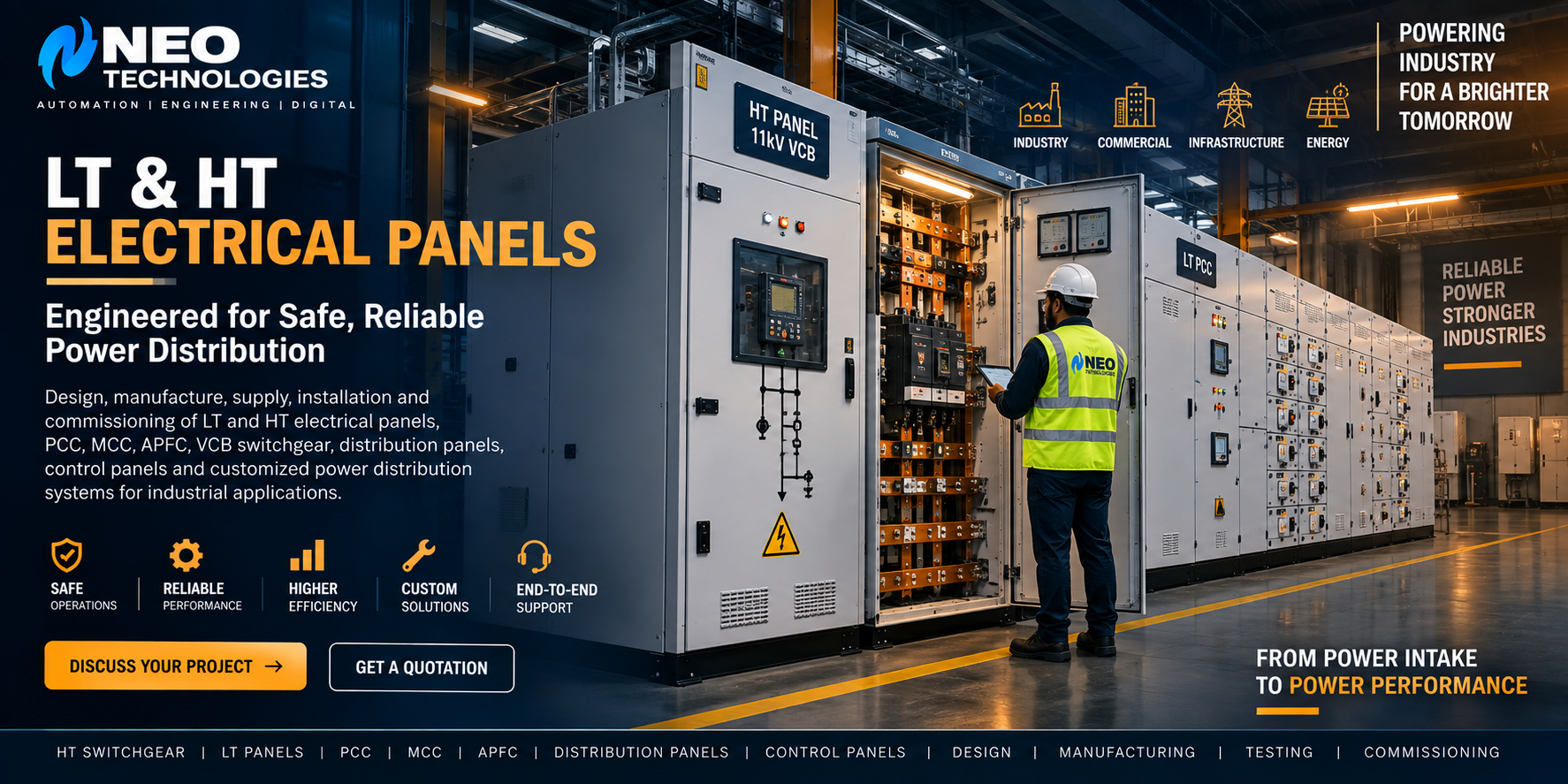
Industrial electrical systems require safe distribution, dependable protection, effective motor control and carefully engineered switchgear.
Neo Technologies provides engineering and integration solutions for LT and HT electrical panels including PCC, MCC, APFC, distribution panels, control panels and VCB-based switchgear systems.
Our approach covers the complete engineering lifecycle from system study and electrical design through panel manufacturing support, wiring, testing, installation and commissioning.
Electrical panels form the operational backbone between incoming electrical power and the machines, motors, processes and utilities that depend on it.
Integrated low-voltage panel solutions for distribution, protection, motor control, metering and industrial electrical-system management.
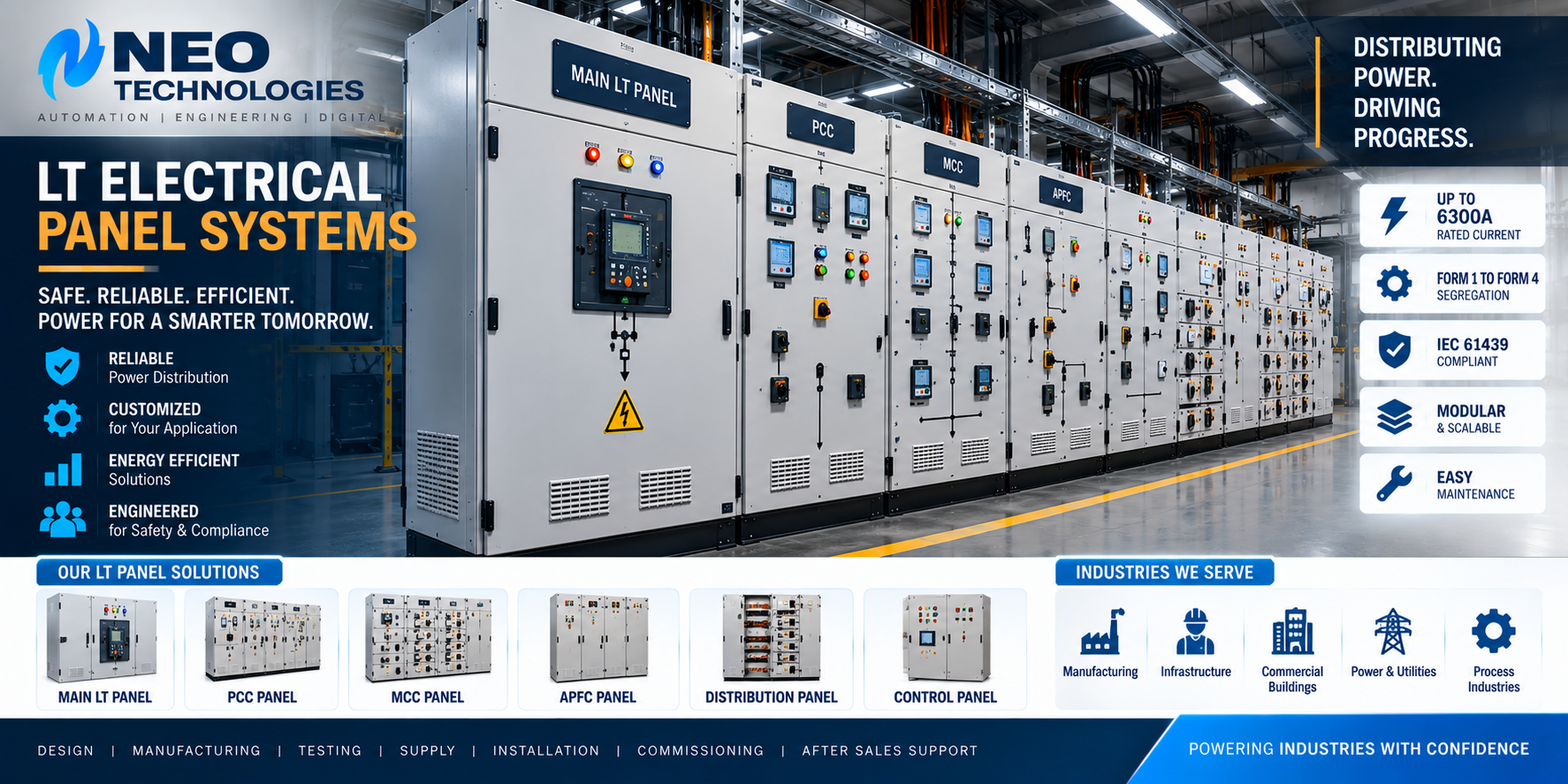
Main incoming power distribution, protection, metering and outgoing feeder management.
Power Control Centres for organized industrial power distribution and feeder protection.
Motor Control Centres for motor starting, protection, isolation and control.
Customized electrical distribution for machines, utilities, process areas and building loads.
Engineered switchgear architectures for incoming supply, protection, switching, metering and controlled distribution of medium-voltage power.
HT panel configurations can include VCB incomers, outgoing feeders, bus couplers, metering and protection arrangements selected according to project and system requirements.
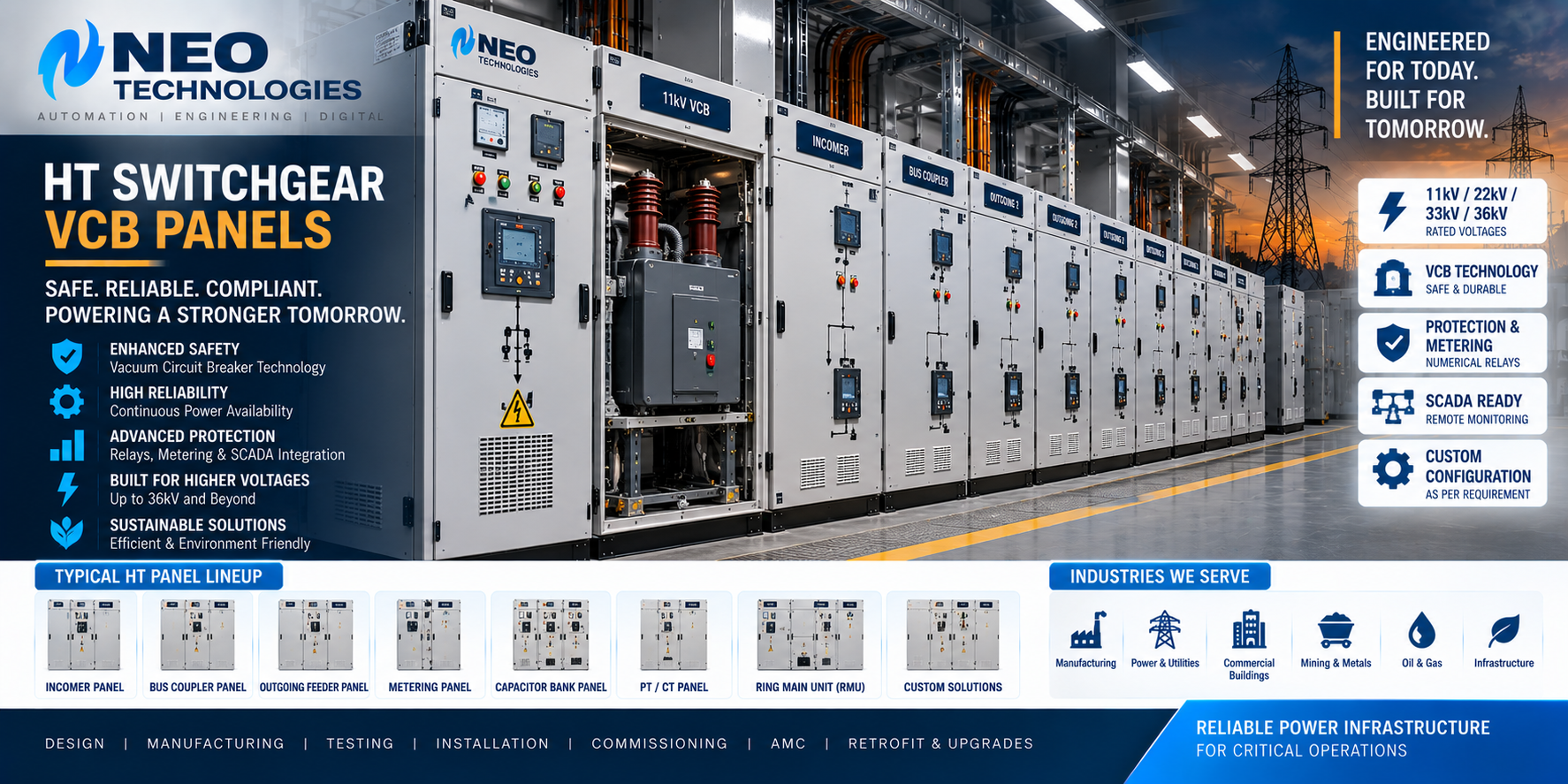
A coordinated panel architecture distributes electrical power while providing switching, protection, metering, motor control and process integration.
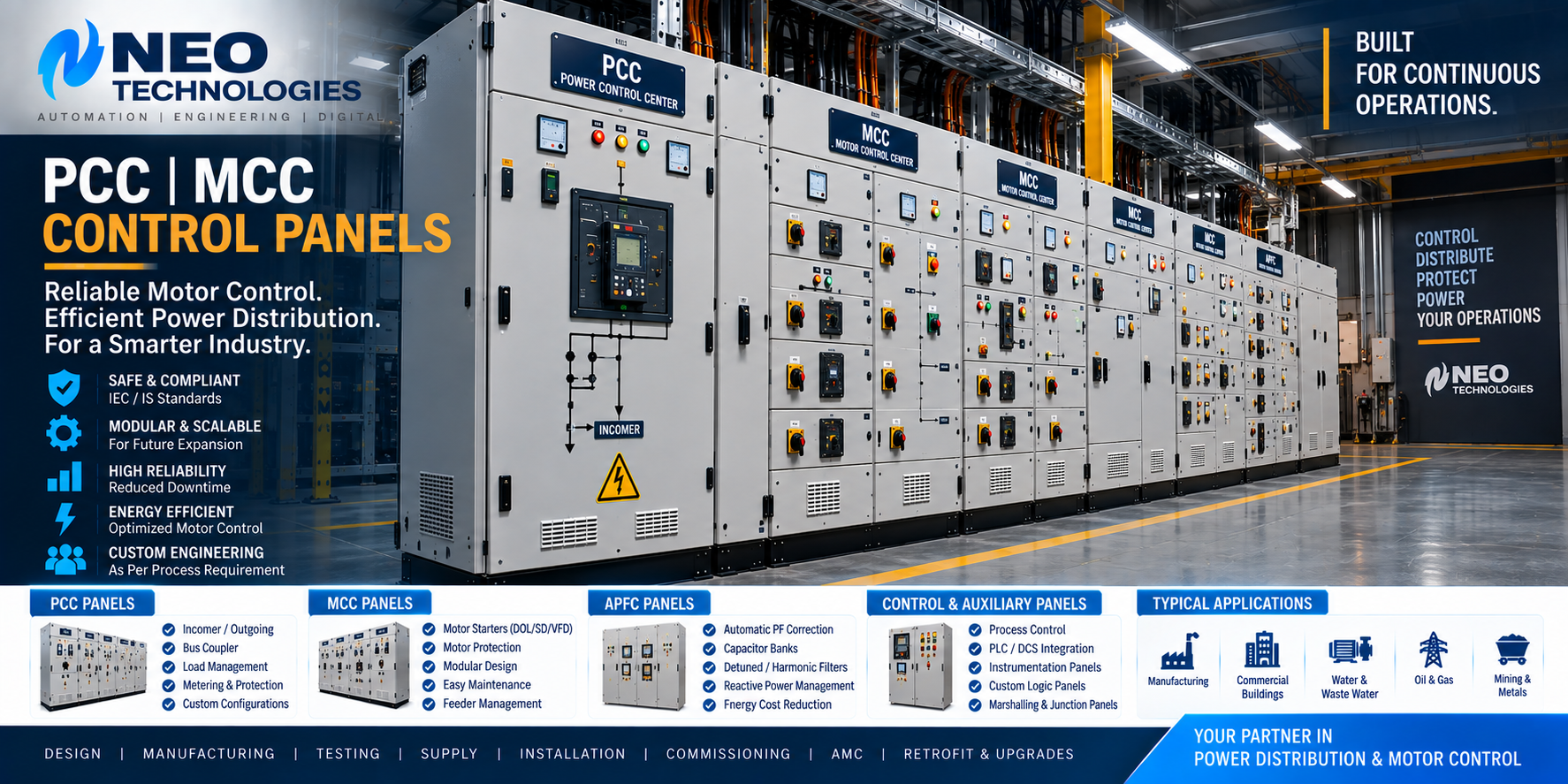
Separate power distribution from motor control while maintaining coordinated protection, monitoring and operational control.
PCC panels distribute incoming LT power to major outgoing feeders and downstream systems while incorporating switching, protection and metering.
MCC panels centralize motor feeders and can integrate starters, contactors, protection devices, VFDs and control interfaces according to motor and process needs.
Automatic power factor correction systems help manage reactive power by switching capacitor stages according to changing electrical load conditions.
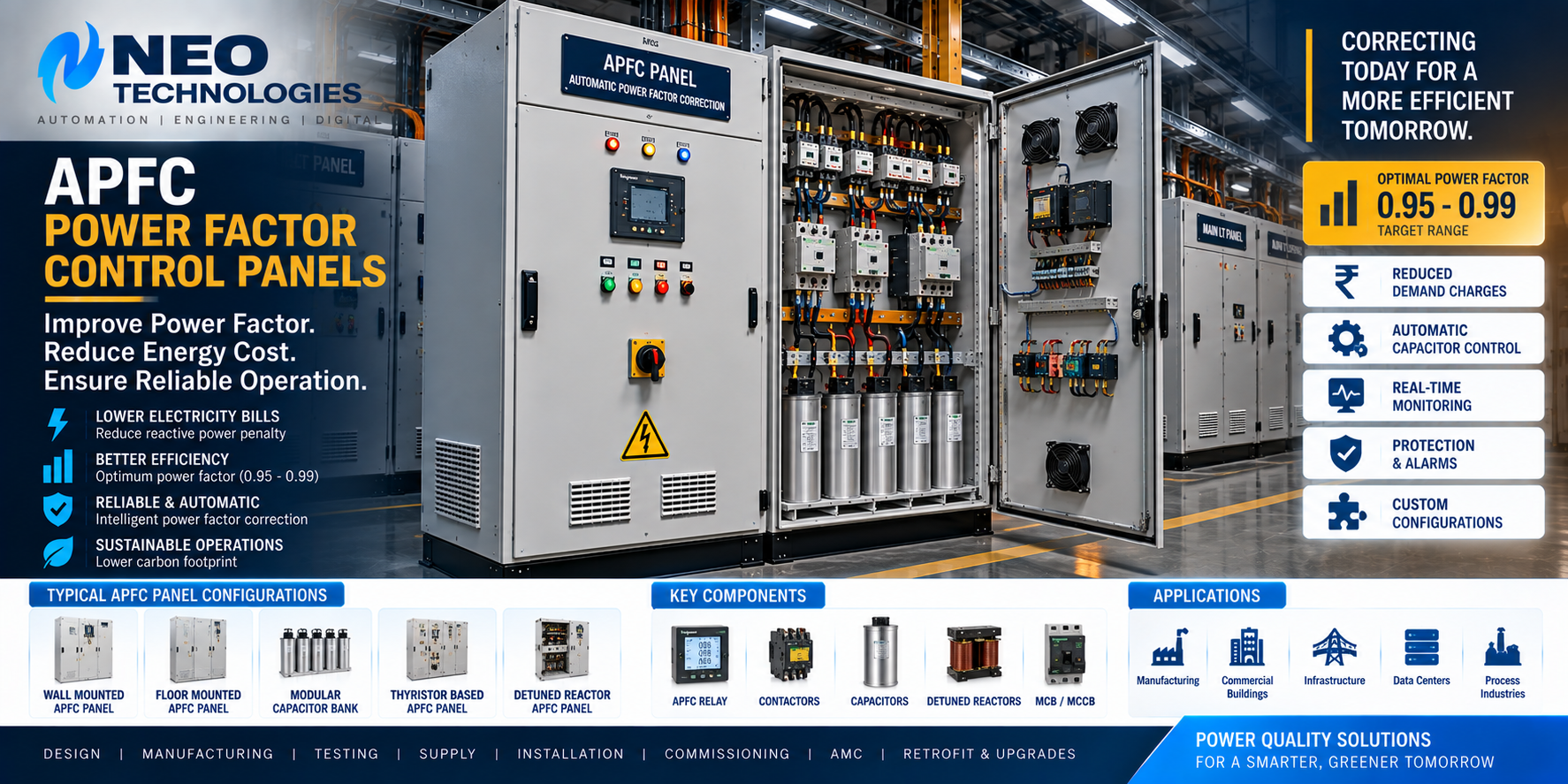
Monitors system conditions and controls capacitor-bank switching stages.
Provide reactive-power compensation based on system design requirements.
Contactor or suitable switching arrangements selected for the application.
Reactor-based configurations can be considered where harmonic conditions require them.
Good panel manufacturing begins with clear, coordinated and technically complete engineering.
Electrical design documentation establishes how power is distributed, protected, controlled and physically arranged before fabrication begins.
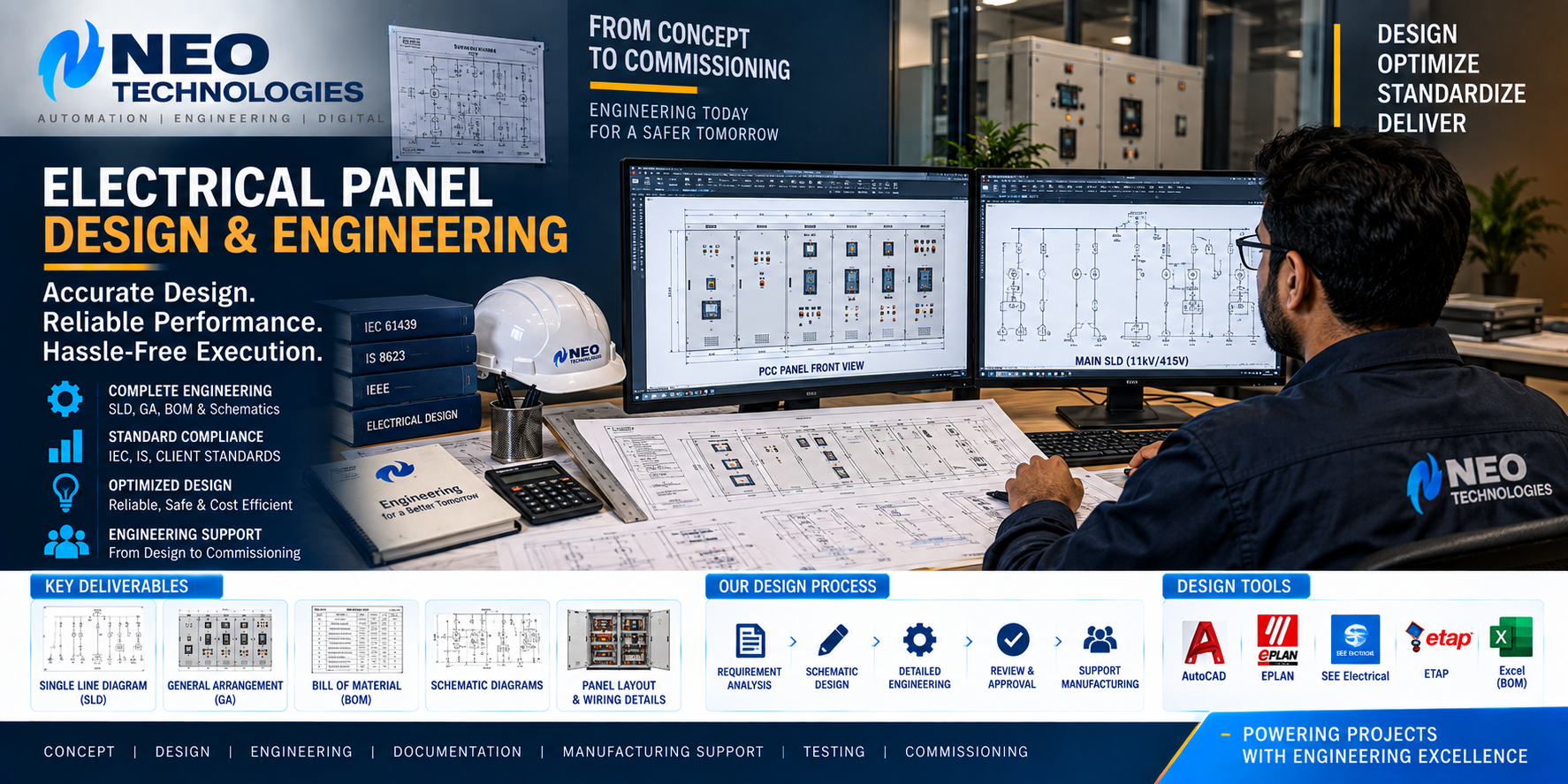
Single-line diagrams defining electrical distribution and major protection architecture.
General arrangement defining panel sections, dimensions, devices and physical layout.
Structured bill of materials covering selected switchgear, protection and control components.
Control, protection, indication and interlocking circuits prepared for manufacturing and testing.
Engineering drawings are translated into physical switchgear assemblies through enclosure preparation, busbar work, component mounting, wiring and inspection.
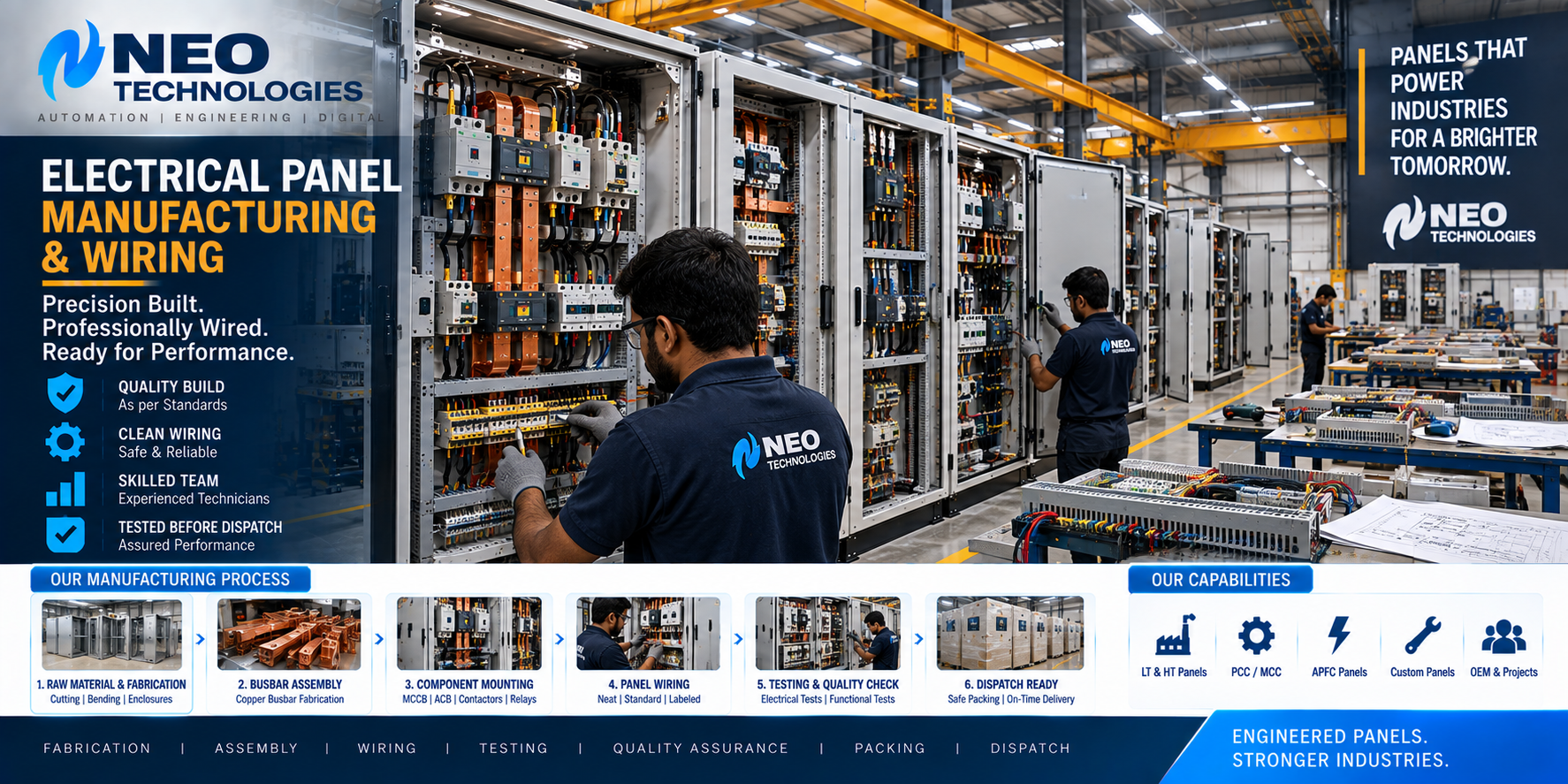
Enclosure and mechanical preparation according to approved panel arrangement.
Busbar preparation and assembly according to engineered requirements.
Mounting of switchgear, relays, meters, terminals and control devices.
Power and control wiring according to approved schematics.
Verification of assembly, wiring, labeling and workmanship.
Electrical and functional verification prior to dispatch or installation.
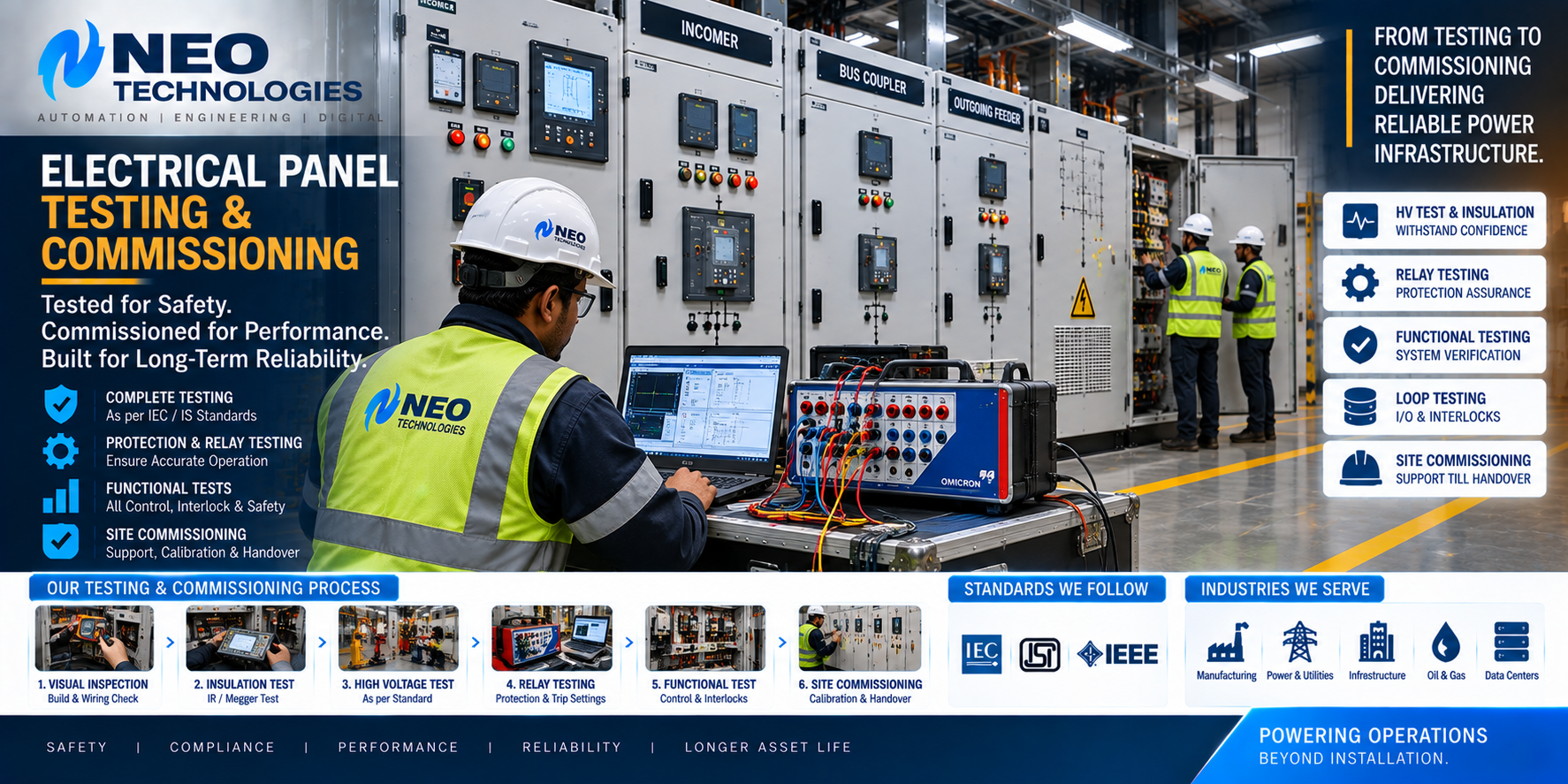
Testing verifies that the assembled system corresponds with approved engineering and performs its intended electrical and control functions.
The exact test scope depends on panel type, voltage level, equipment, applicable standards and project specifications.
Main LT and low-voltage distribution systems.
VCB-based switchgear and feeder configurations.
Power distribution, switching and feeder protection.
Centralized motor control and protection systems.
Automatic reactive-power compensation systems.
Variable-frequency drive integration and motor control.
PLC, relay and application-specific control systems.
Application-specific electrical and automation assemblies.
Panel architecture is engineered around the electrical, operational and control requirements of each application.
Modern electrical panels increasingly connect with PLC, SCADA, drives, instrumentation, industrial networks and digital monitoring systems. Our broader automation capabilities help us approach panels as part of the complete industrial control architecture.
Panel solutions developed from system requirements and electrical documentation.
Electrical distribution can be coordinated with PLC, HMI, SCADA and drive systems.
Architecture selected around actual loads, motors, process and operating needs.
Engineering support from design and documentation through testing and commissioning.
Integrated PLC, controls, instrumentation, panels and industrial communication.
PLC, HMI, VFD, servo and integrated machine-control solutions.
Control, instrumentation and automation for industrial process applications.
Communication infrastructure connecting controllers, drives and industrial systems.
Discuss your electrical distribution, PCC, MCC, APFC, VCB switchgear, control panel or customized industrial panel requirement with Neo Technologies.
Discuss Your Panel Requirement Explore System IntegrationLT panels are used on low-voltage electrical distribution systems, while HT or medium-voltage switchgear handles higher-voltage incoming and distribution systems. The exact equipment and configuration depend on system voltage and project requirements.
A Power Control Centre distributes electrical power from an incoming supply to downstream feeders and normally incorporates switching, protection, metering and isolation functions.
A Motor Control Centre groups motor feeders and related switching, starting, protection and control equipment into a coordinated panel system.
An Automatic Power Factor Control panel monitors electrical conditions and automatically switches capacitor stages to provide reactive-power compensation according to system demand.
Typical documentation can include a single-line diagram, general arrangement, bill of materials, power and control schematics, panel layout, terminal details and wiring documentation.
Yes. Depending on the application, electrical panels can integrate PLCs, HMIs, VFDs, protection relays, meters and communication interfaces for connection with SCADA and other industrial systems.
The testing scope depends on the panel and project specification and may include visual inspection, wiring verification, insulation testing, functional testing, protection and relay checks, interlock verification and commissioning activities.