01
Sensing
Pressure, position, temperature, speed, angle, IMU, radar, LiDAR, cameras and GNSS.


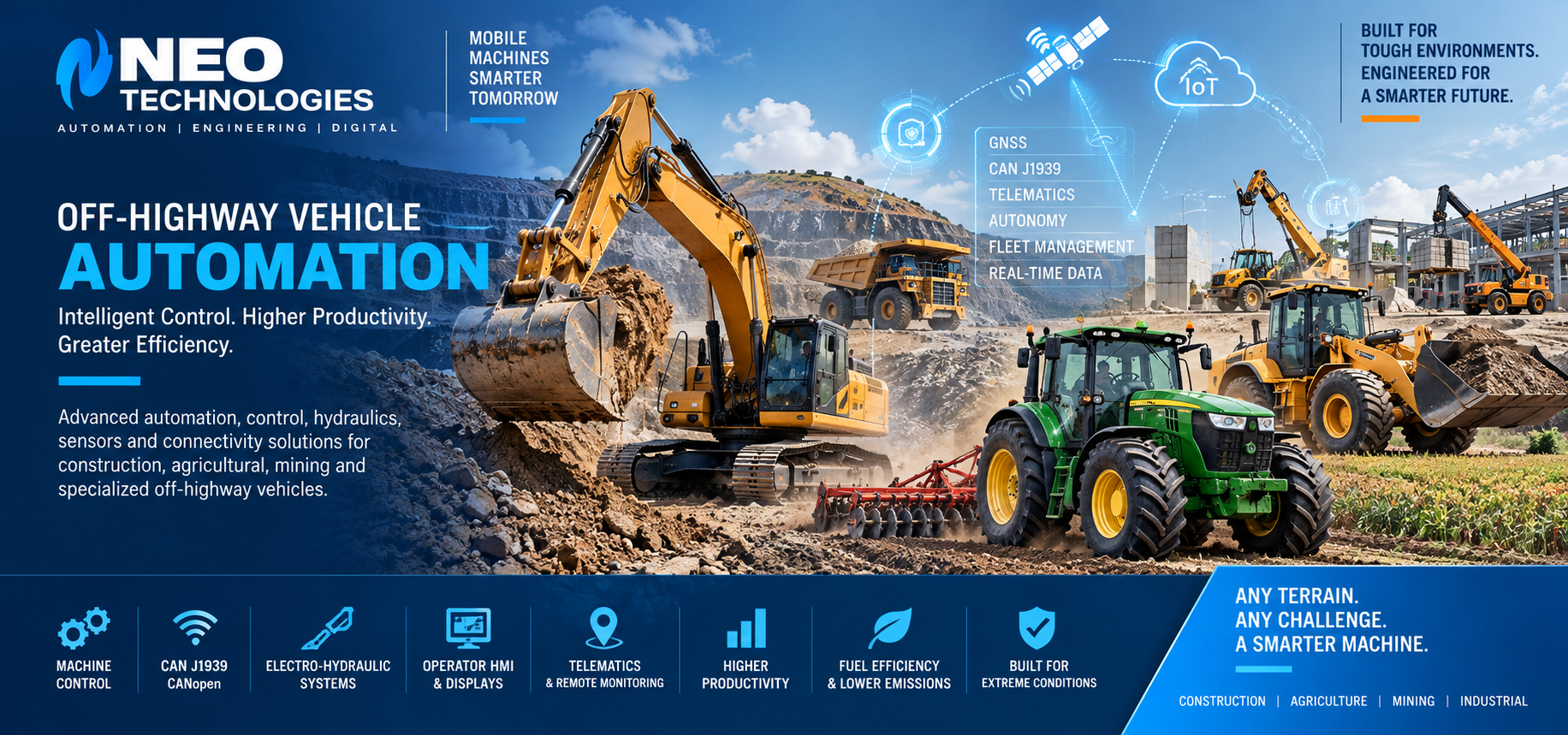
Off-highway machines operate in demanding environments where reliability, precise control, productivity and machine availability are critical.
Neo Technologies develops and integrates automation architectures for construction equipment, agricultural machinery, mining vehicles, material-handling systems and specialized mobile machines.
Our approach connects electronic control, hydraulics, sensors, operator interfaces, vehicle networks and telematics into a coordinated machine-control platform.
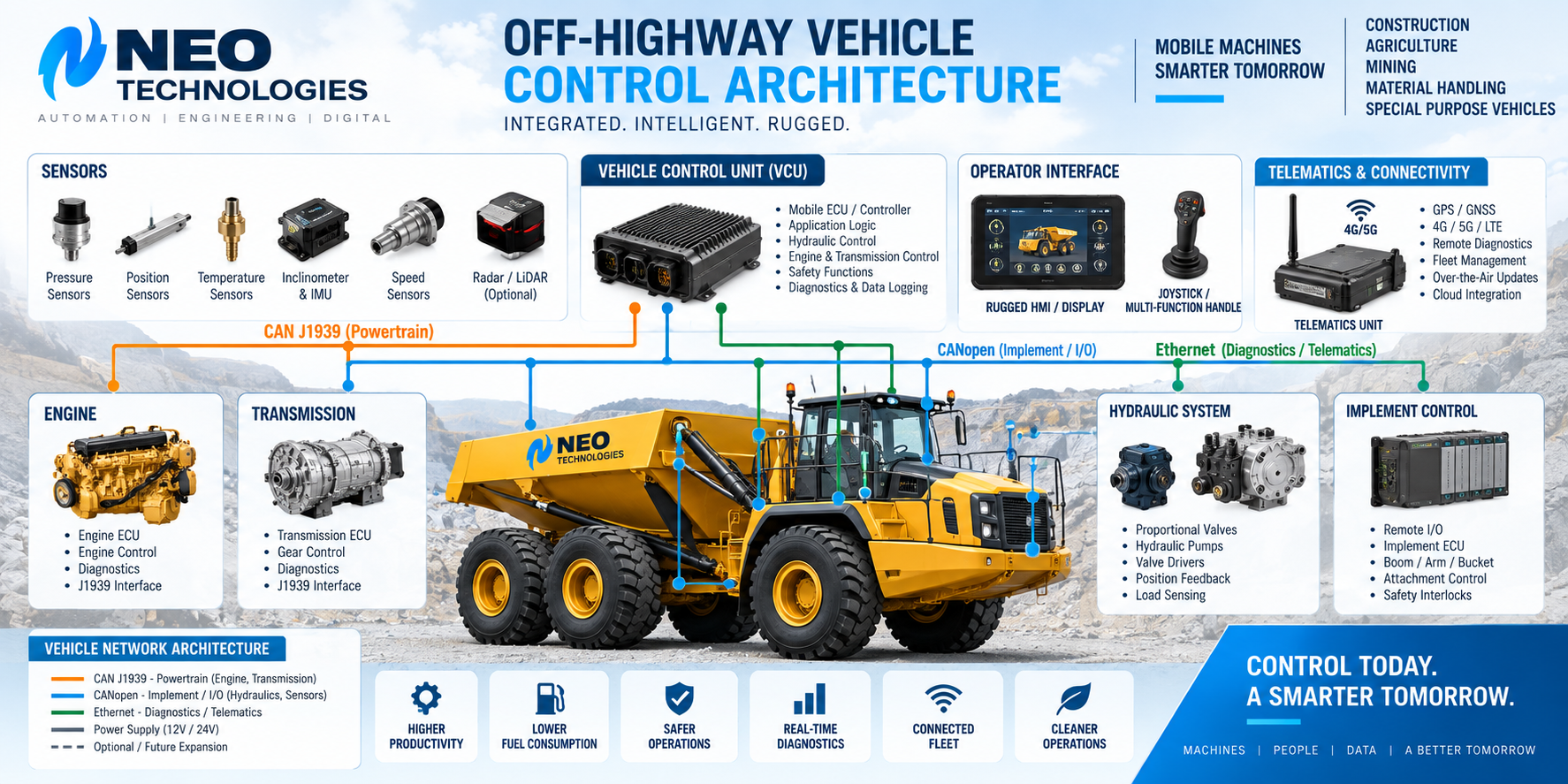
A modern off-highway machine is a distributed control system on wheels or tracks. Powertrain, hydraulics, implements, operator controls, safety systems and connectivity must work together.
A connected architecture integrates vehicle control, sensors, powertrain, hydraulic functions, operator interfaces and telematics into one machine platform.
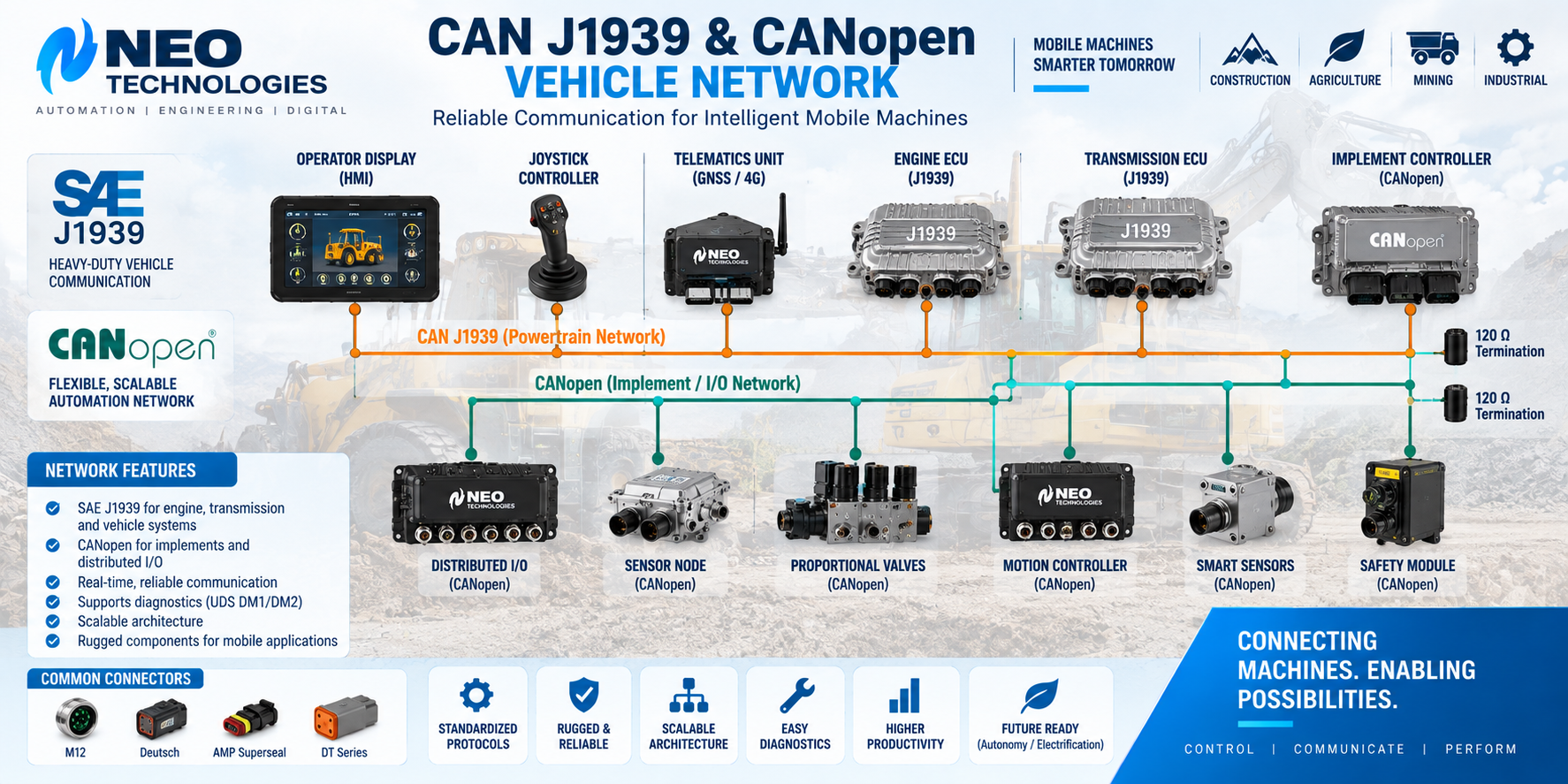
Reliable communication is fundamental to distributed control across modern off-highway machines.
SAE J1939 is widely used for powertrain and vehicle communication, while CANopen can support distributed implement control, sensors, actuators and I/O.
Electronic control combined with hydraulic power enables precise, repeatable and intelligent machine movement.
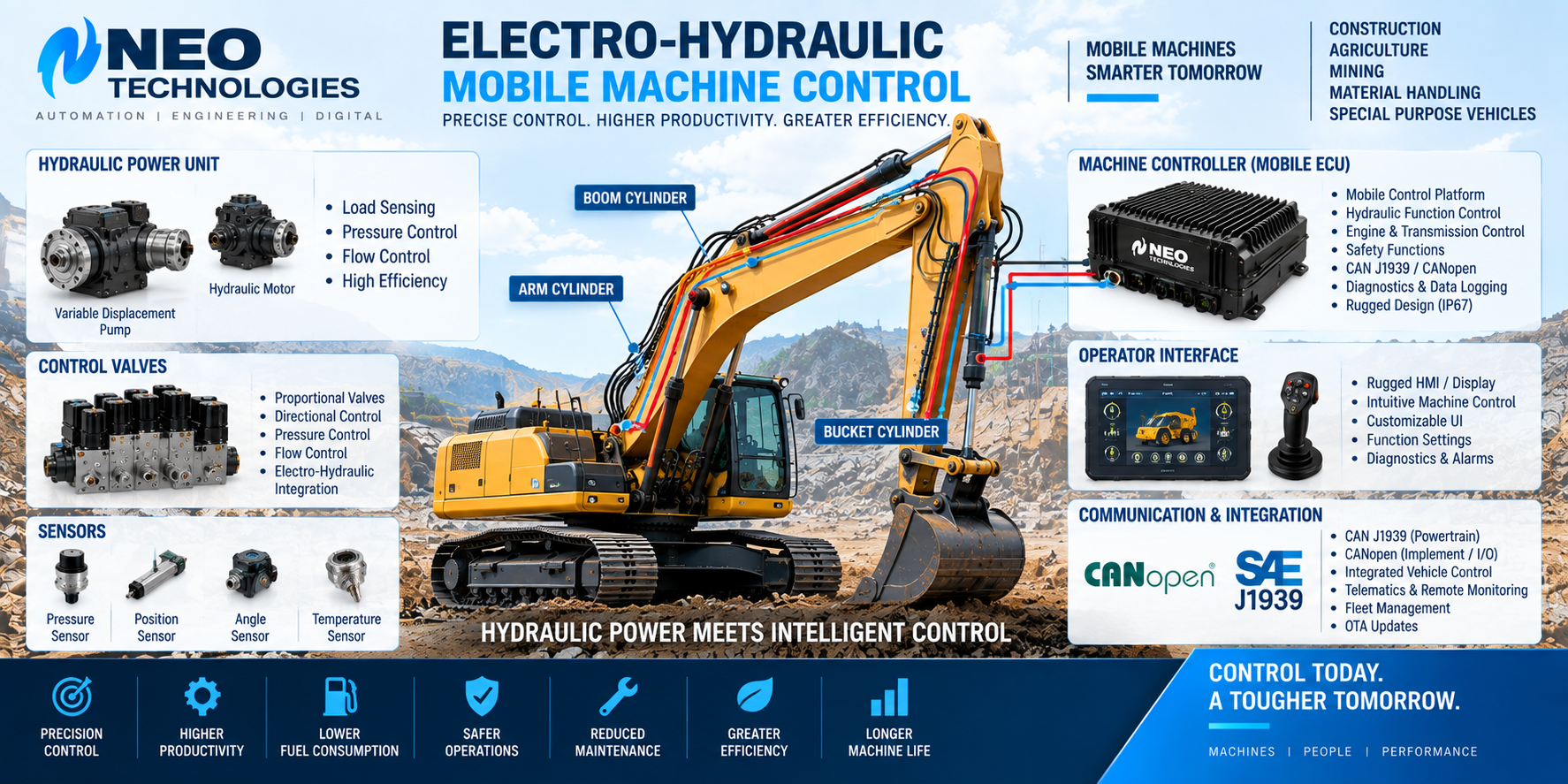
Pumps, motors, cylinders and load-sensing systems.
Electronic valve control for precise machine movement.
Pressure, position, temperature, angle and speed.
Coordinated electronic and hydraulic machine functions.
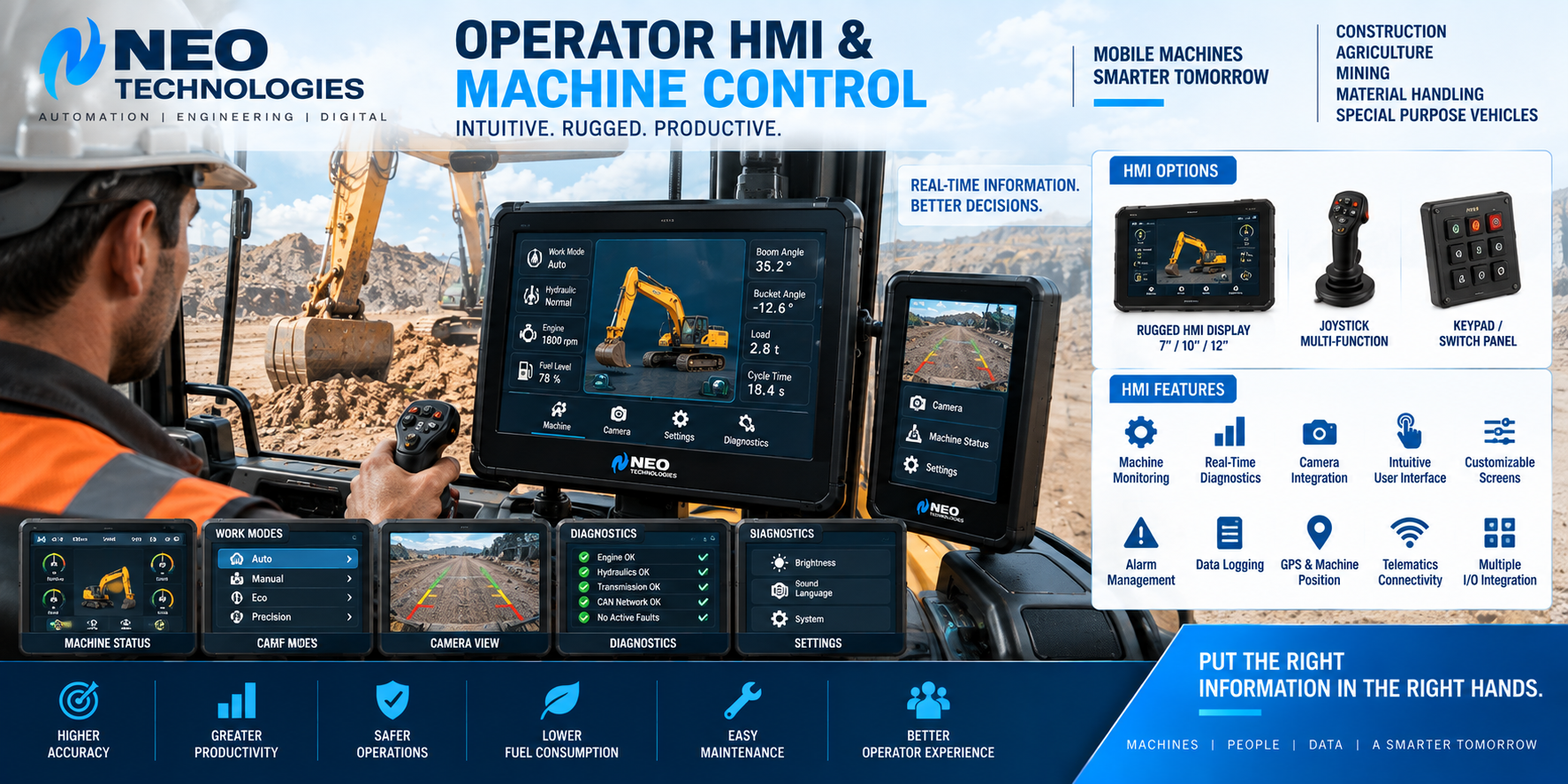
Rugged HMIs provide operators with a clear view of machine condition, operating modes, alarms, diagnostics and control functions.
Machine connectivity transforms operating data into visibility for fleet management, maintenance, diagnostics and operational decision-making.
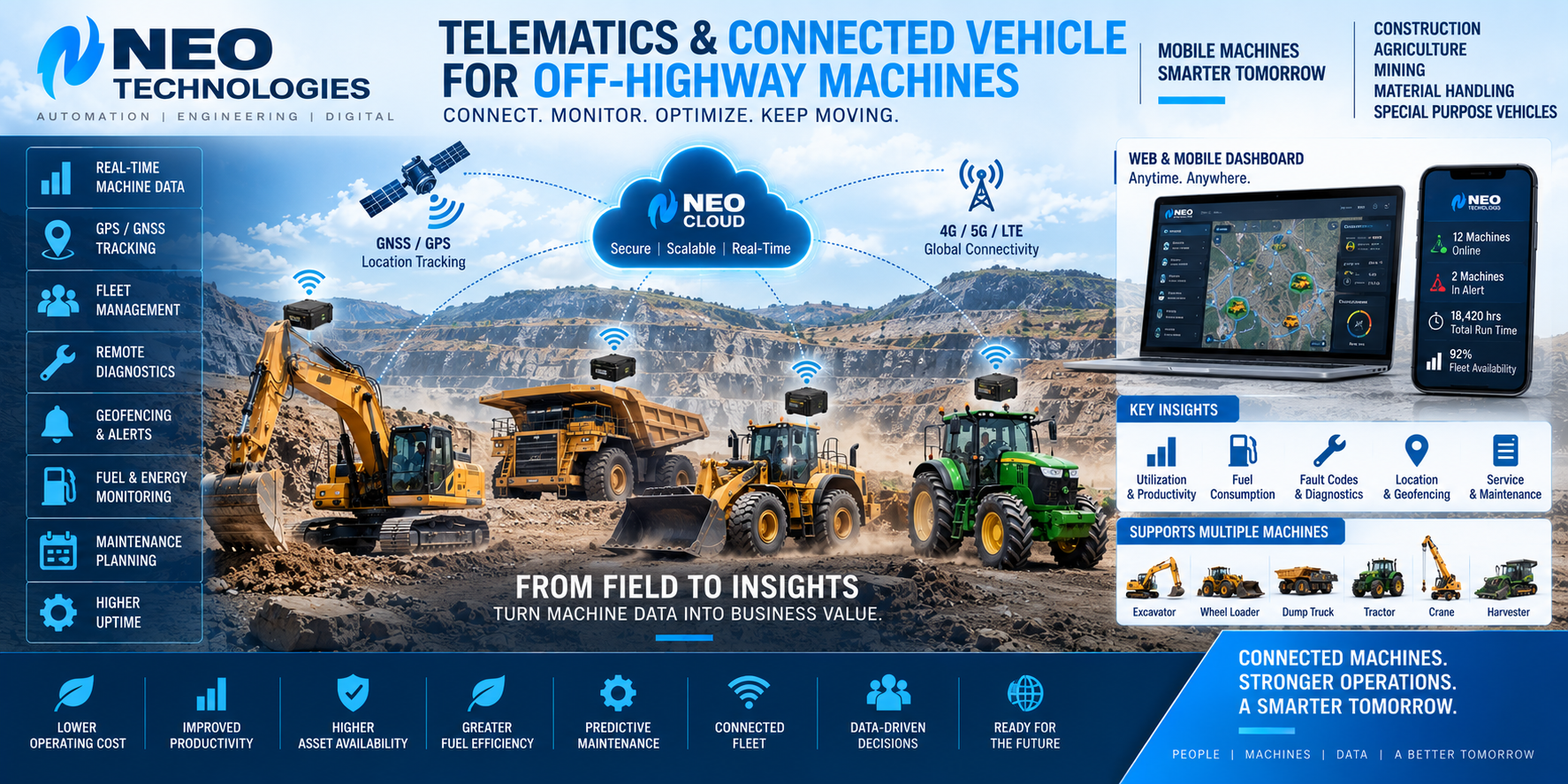
Machine location, movement and operational visibility.
Monitor machine condition and diagnostic information remotely.
View utilization, availability and machine activity.
Use operating information to support maintenance planning.
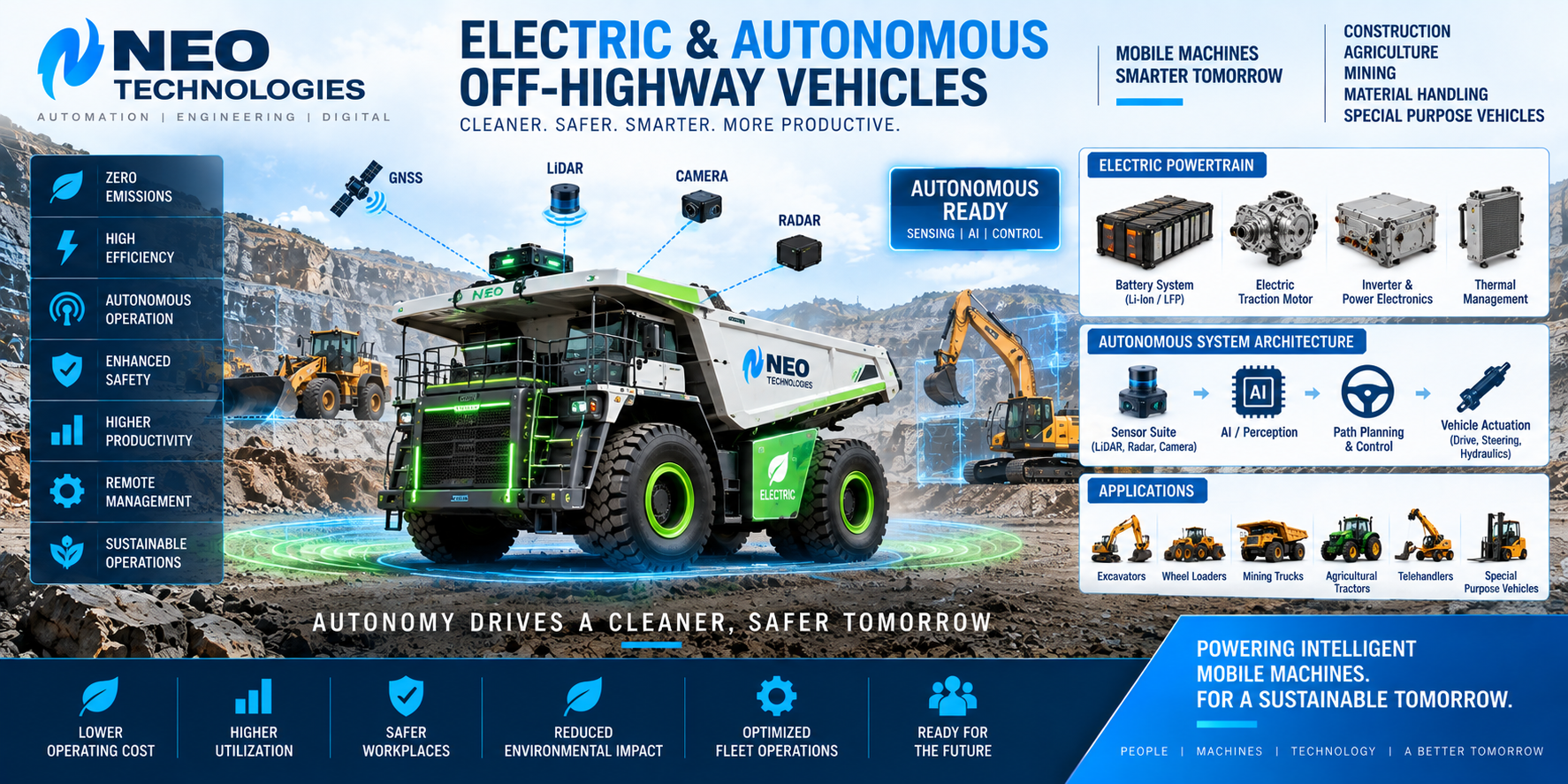
Electrification, intelligent sensing and advanced machine control are changing the architecture of off-highway vehicles.
Electric machines introduce batteries, traction motors, inverters and thermal-management systems, while autonomous functions can combine GNSS, cameras, radar, LiDAR, perception and machine actuation.
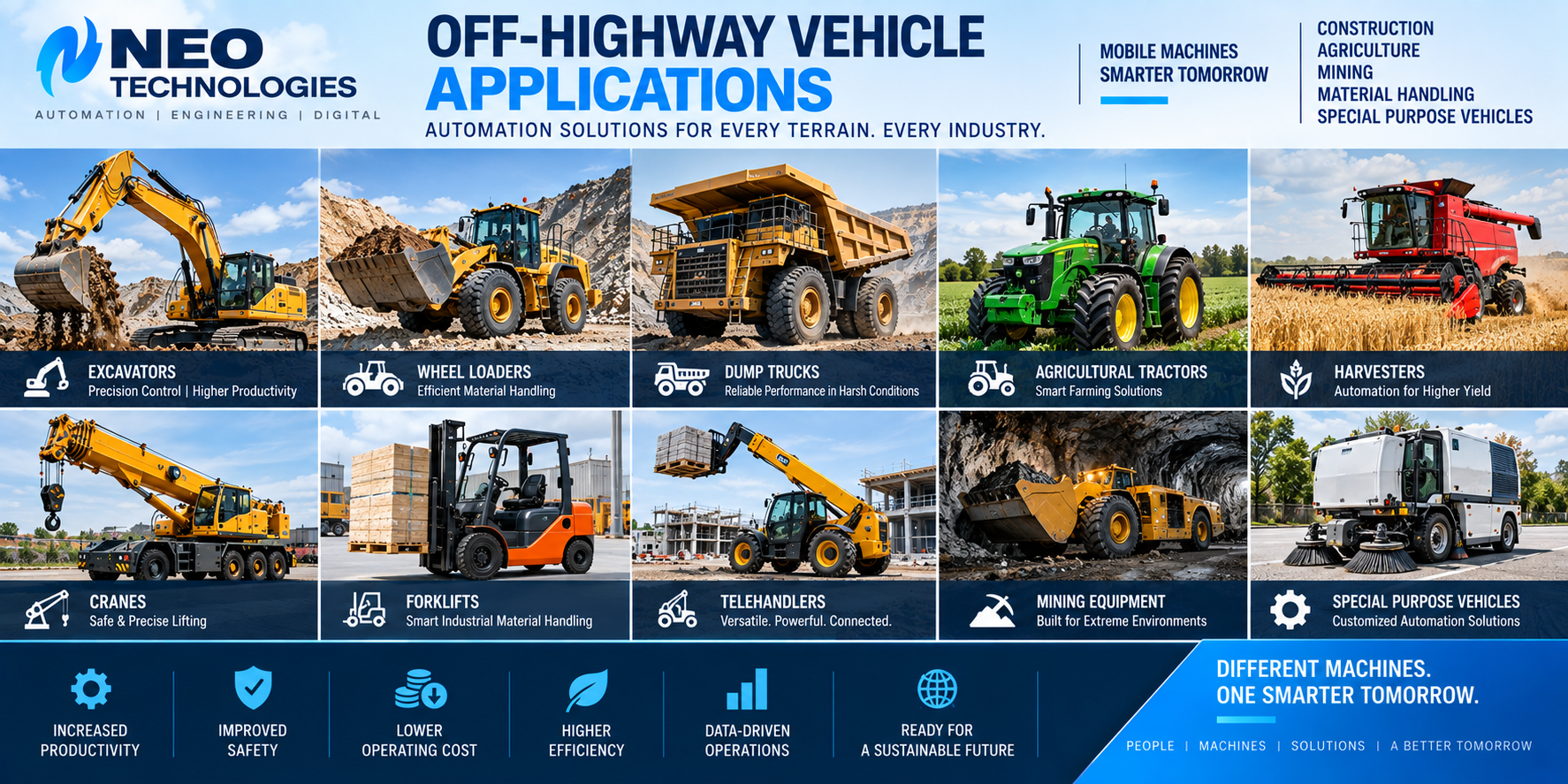
The same fundamental control technologies can be engineered around very different off-highway vehicle applications.
Pressure, position, temperature, speed, angle, IMU, radar, LiDAR, cameras and GNSS.
Mobile ECU, VCU, distributed controllers, I/O and application-specific control logic.
Electro-hydraulic valves, pumps, motors, cylinders and electric drives.
CAN J1939, CANopen, Ethernet, cellular connectivity, GNSS and telematics.
Successful mobile automation begins with understanding the machine, its operating environment and the required functional behaviour.
Understand machine functions, environment, loads and operating requirements.
Define controllers, I/O, networks, sensors and interfaces.
Develop machine logic, hydraulic control and operating sequences.
Develop operator controls, visualization and diagnostic functions.
Integrate powertrain, hydraulics, controls and vehicle networks.
Validate machine behaviour, diagnostics and system performance.
Off-highway automation requires more than programming a controller. It requires an understanding of controls, communications, instrumentation, hydraulics, operator interaction and machine operation.
Architecture built around the machine and application requirement.
Control, networking, hydraulics, HMI and connectivity engineered together.
Platforms that can evolve with additional functions and connectivity.
Engineering decisions centered around real machine operation.
PLC, HMI, drives, motion and integrated machine-control solutions.
Integration of controls, instrumentation, communication and software systems.
Industrial communication, networking and connected control architectures.
IIoT, industrial data, monitoring and connected technology solutions.
Talk to Neo Technologies about vehicle control, CAN communication, electro-hydraulics, HMI, telematics or integrated mobile machine automation.
Discuss Your OHV Project Explore System IntegrationOff-highway vehicle automation applies electronic controllers, sensors, communication networks, hydraulic control, operator interfaces and software to control and monitor mobile machinery used outside conventional road applications.
SAE J1939 is a CAN-based communication standard commonly used in heavy-duty and off-highway vehicles for communication between engine, transmission, vehicle and other electronic control units.
CANopen can be used to connect distributed controllers, sensors, I/O modules, actuators and implement-control devices within a mobile-machine architecture.
Electro-hydraulic control combines electronic controllers and sensor feedback with hydraulic pumps, valves, motors and cylinders to achieve controlled machine movement and automated functions.
Telematics systems can transmit machine information such as location, operating hours, diagnostics, utilization and selected performance parameters to remote monitoring platforms.
Applications can include excavators, loaders, dump trucks, tractors, harvesters, cranes, forklifts, telehandlers, mining equipment and specialized mobile machines.