01
PLC Automation
Hardware configuration, process logic, sequencing, interlocking, diagnostics and communication.

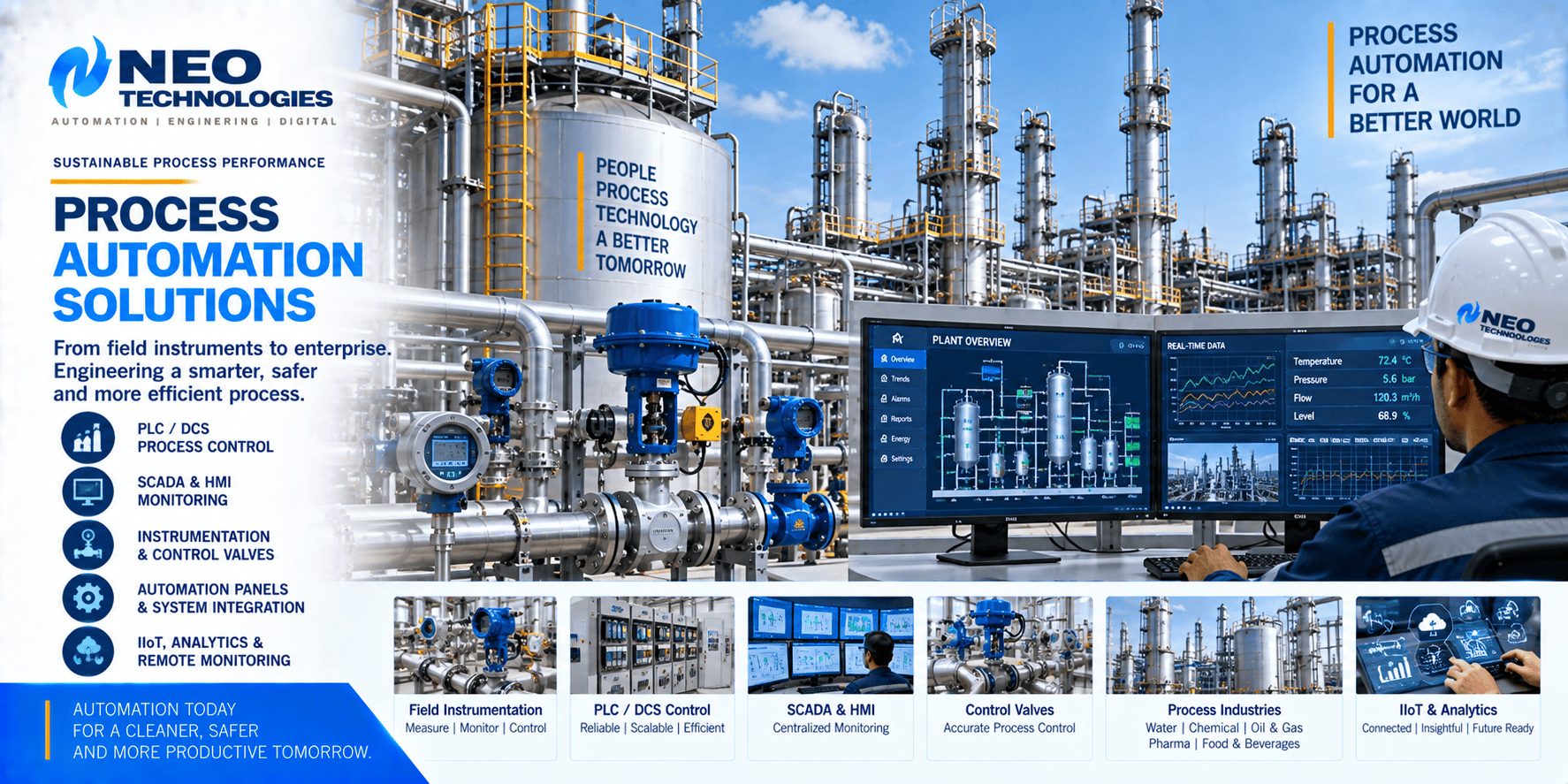
Neo Technologies provides integrated automation engineering for continuous, batch, utility and industrial process applications.
A process automation platform can integrate field instrumentation, remote I/O, PLC/PAC or DCS controllers, variable-frequency drives, control valves, operator interfaces, SCADA, historians and industrial communication networks into one coordinated system.
Process measurement, control logic, operator visualization, final control elements and plant data should operate as parts of one coordinated automation architecture.
Discuss Your ProcessA modern process-control architecture connects field measurement and actuation with controllers, supervisory systems, plant information and higher-level applications.
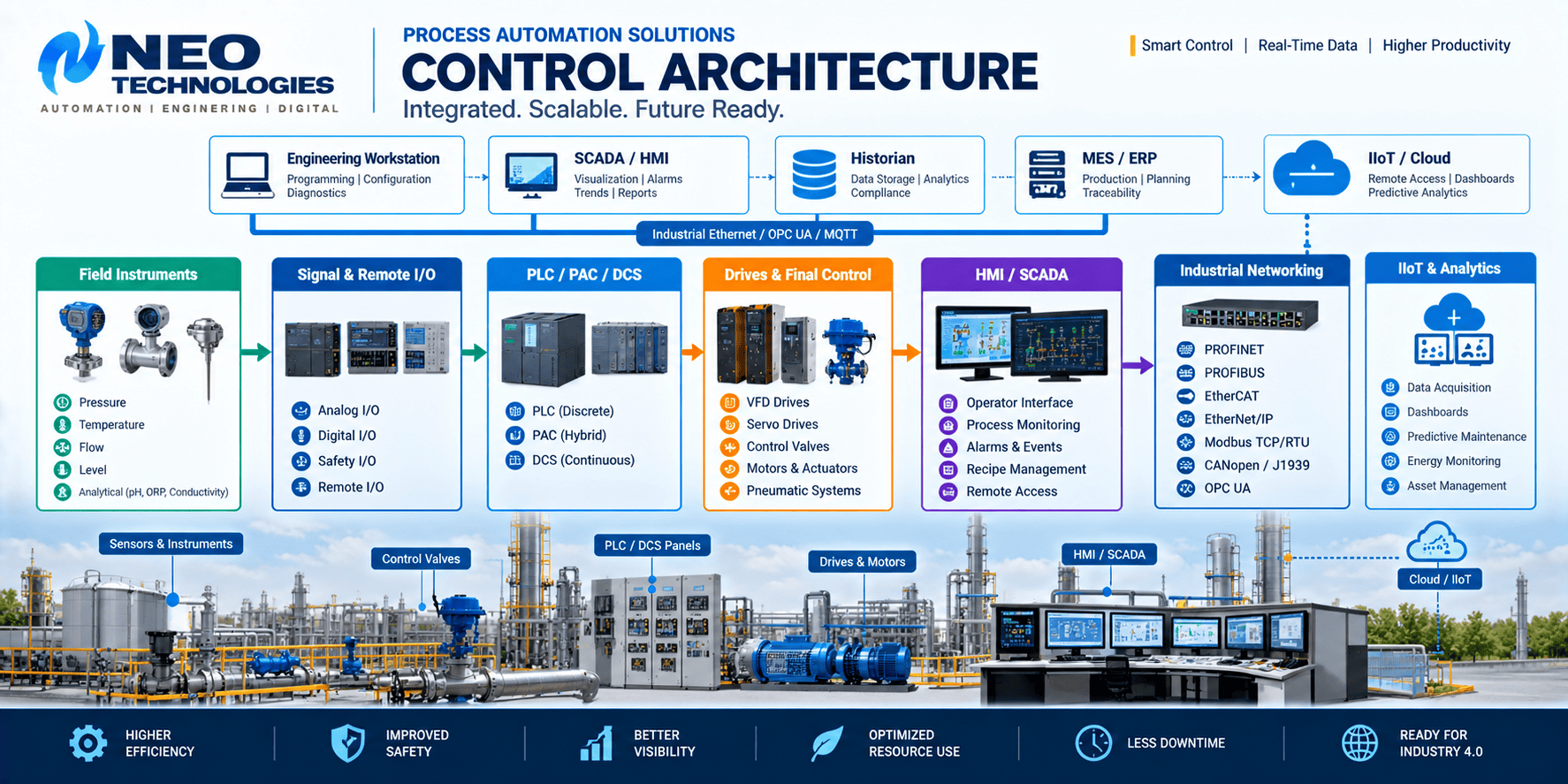
Automation architecture can be selected according to process complexity, control requirements, installed equipment and plant standards.
Hardware configuration, process logic, sequencing, interlocking, diagnostics and communication.
Distributed control architecture for continuous and complex process-control applications.
Plant visualization, supervisory control, alarms, trends, historical data and reporting.
Operator interfaces for process visualization, control, alarms, diagnostics and production information.
Variable-speed control for pumps, fans, agitators, conveyors and other process equipment.
Closed-loop regulation of temperature, pressure, flow, level and other process variables.
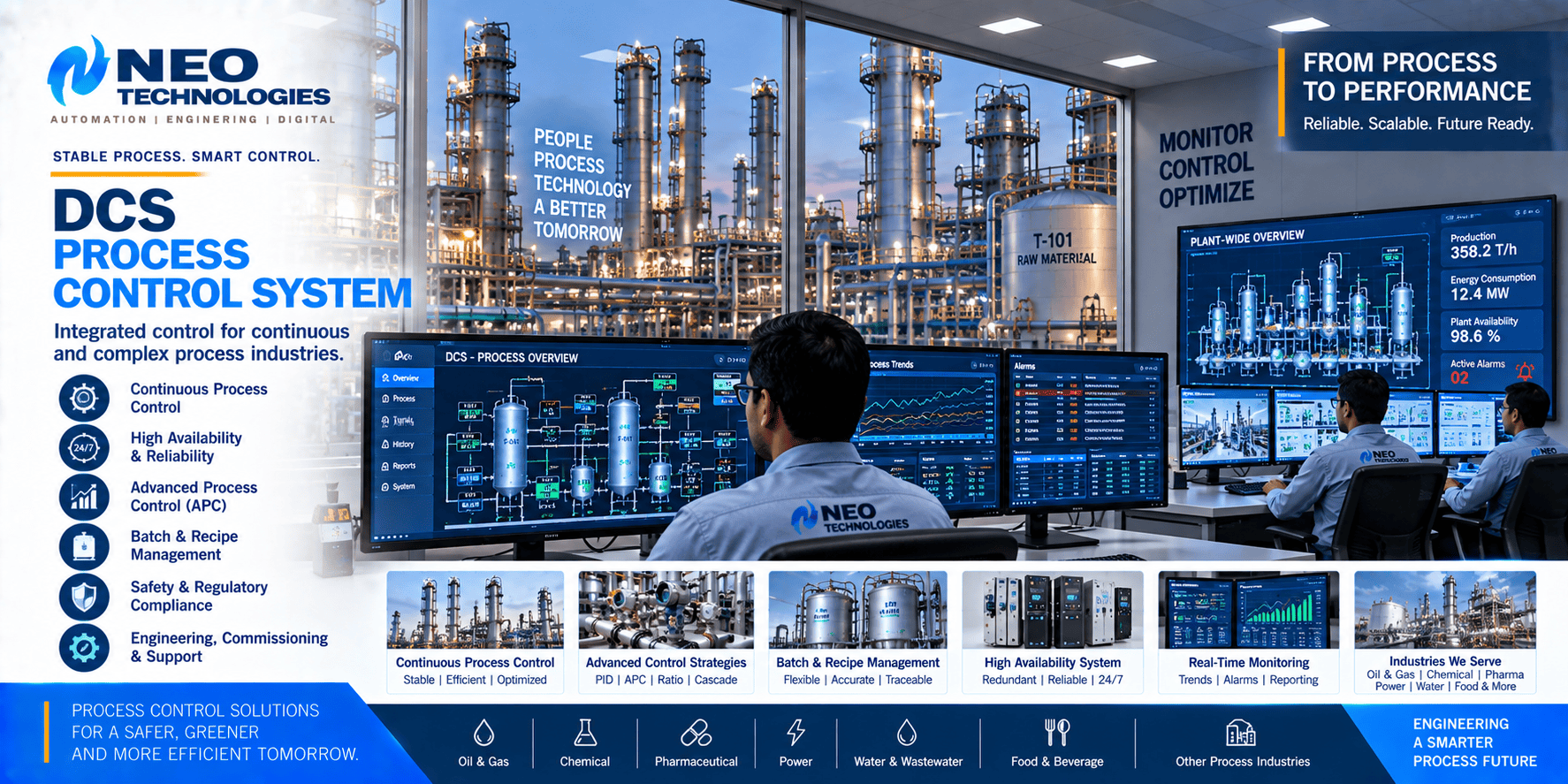
Distributed control systems provide an integrated environment for process control, operator supervision, alarms, trends and plant information.
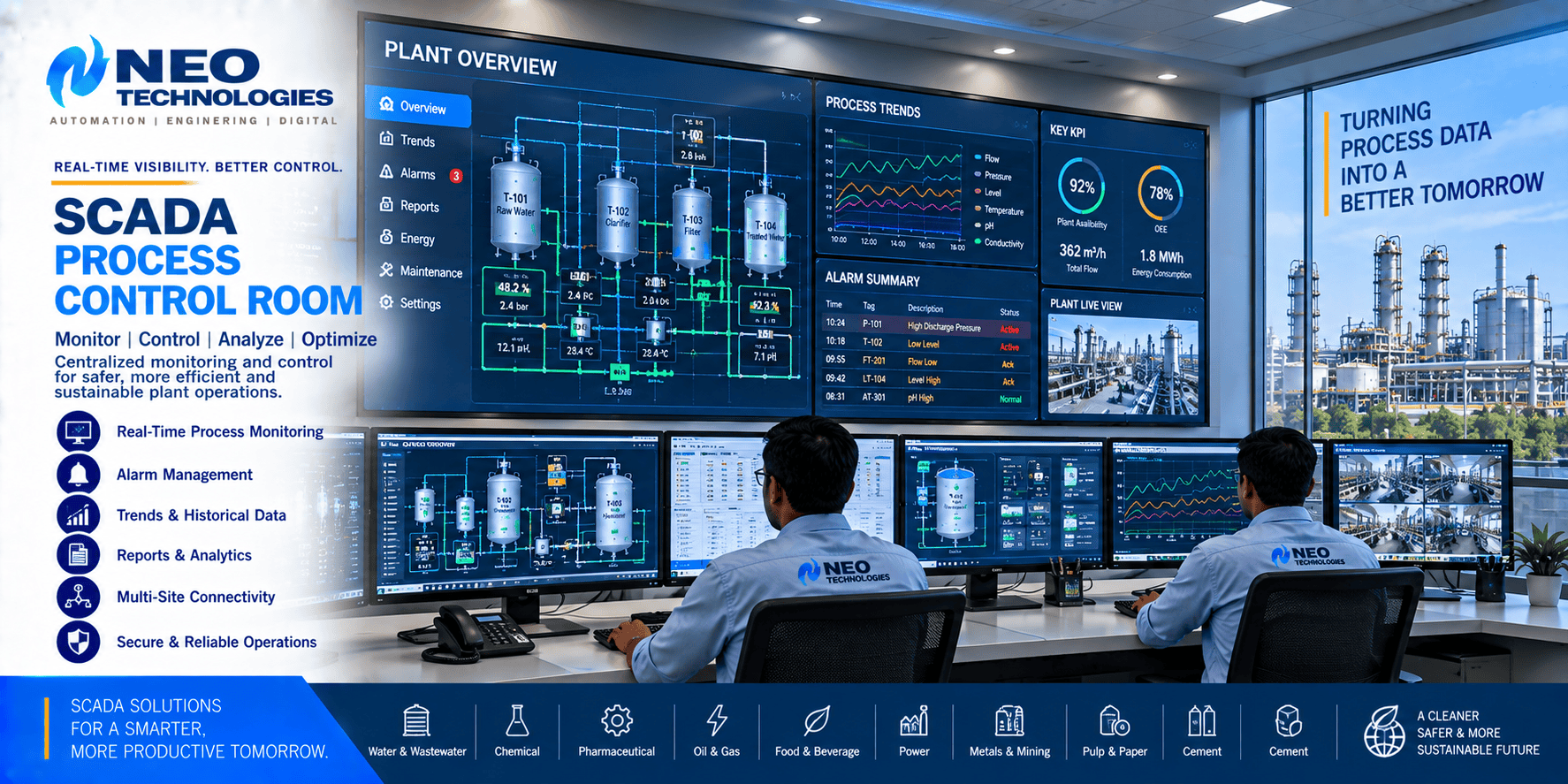
Bring process status, alarms, trends, equipment information and historical plant data into a centralized supervisory environment.
Process automation begins with appropriate field measurement and correctly engineered final control elements.
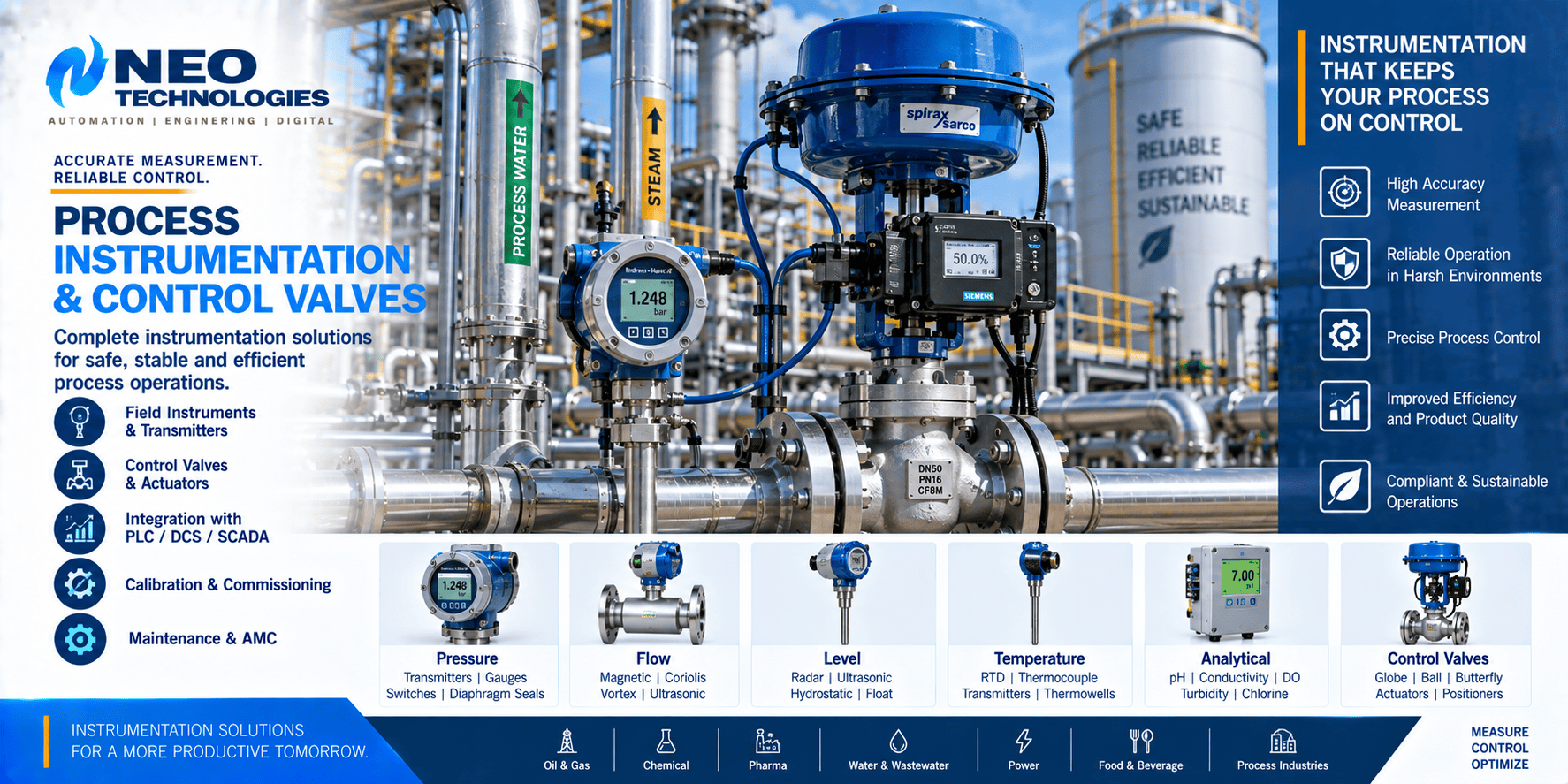
Transmitters, switches, gauges and differential-pressure measurement.
Electromagnetic, vortex, ultrasonic, mass and differential-pressure measurement.
Radar, ultrasonic, hydrostatic, capacitance and level-switch technologies.
RTDs, thermocouples, temperature transmitters and associated control systems.
pH, ORP, conductivity, dissolved oxygen and other application-specific analytical measurements.
Modulating and on/off valves with appropriate actuators and positioners.
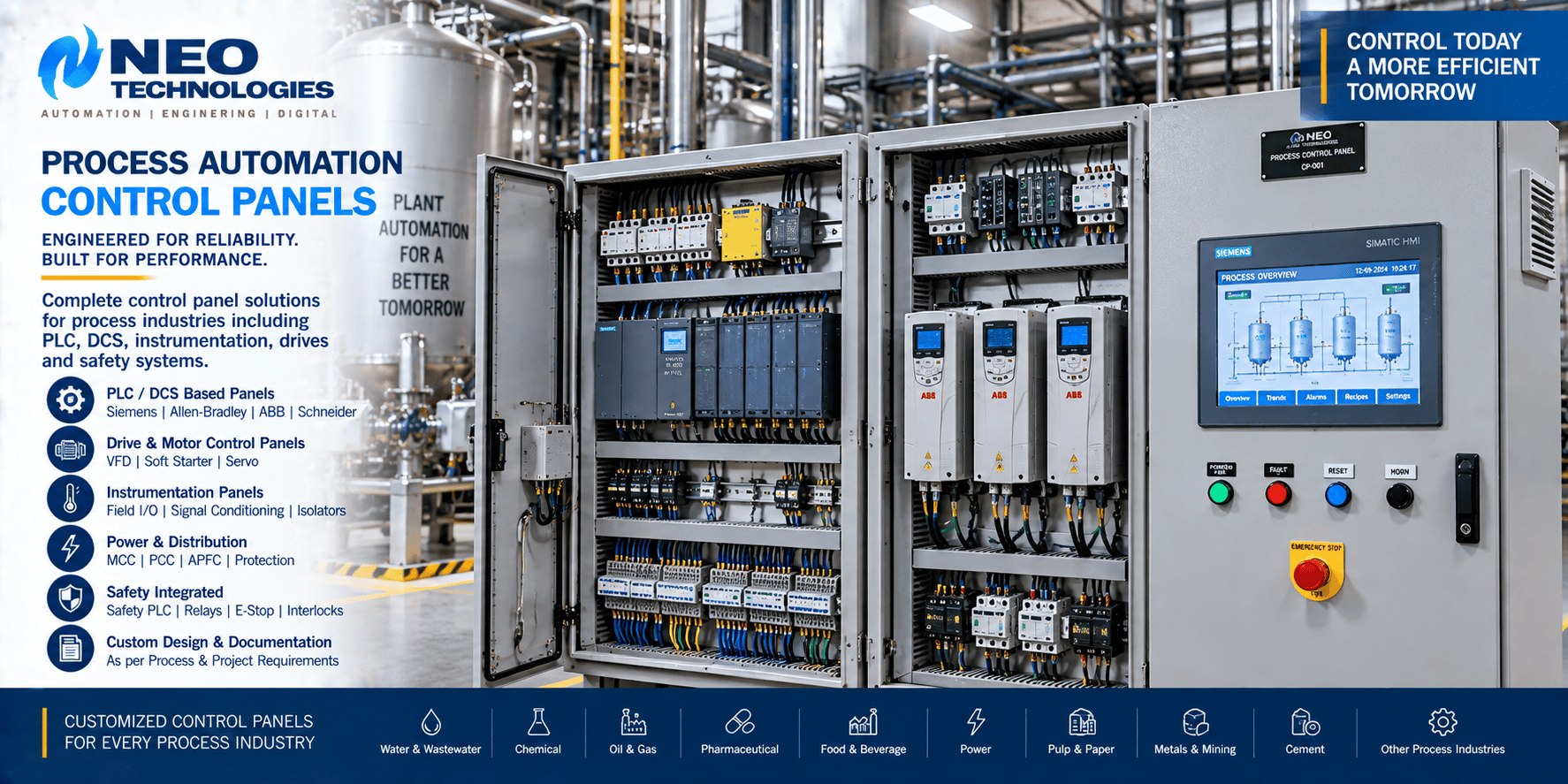
Control panels provide the physical interface between field equipment, controllers, drives, communication systems and plant electrical systems.
Automation can be engineered for individual equipment, process skids, utilities, treatment systems and complete industrial process areas.
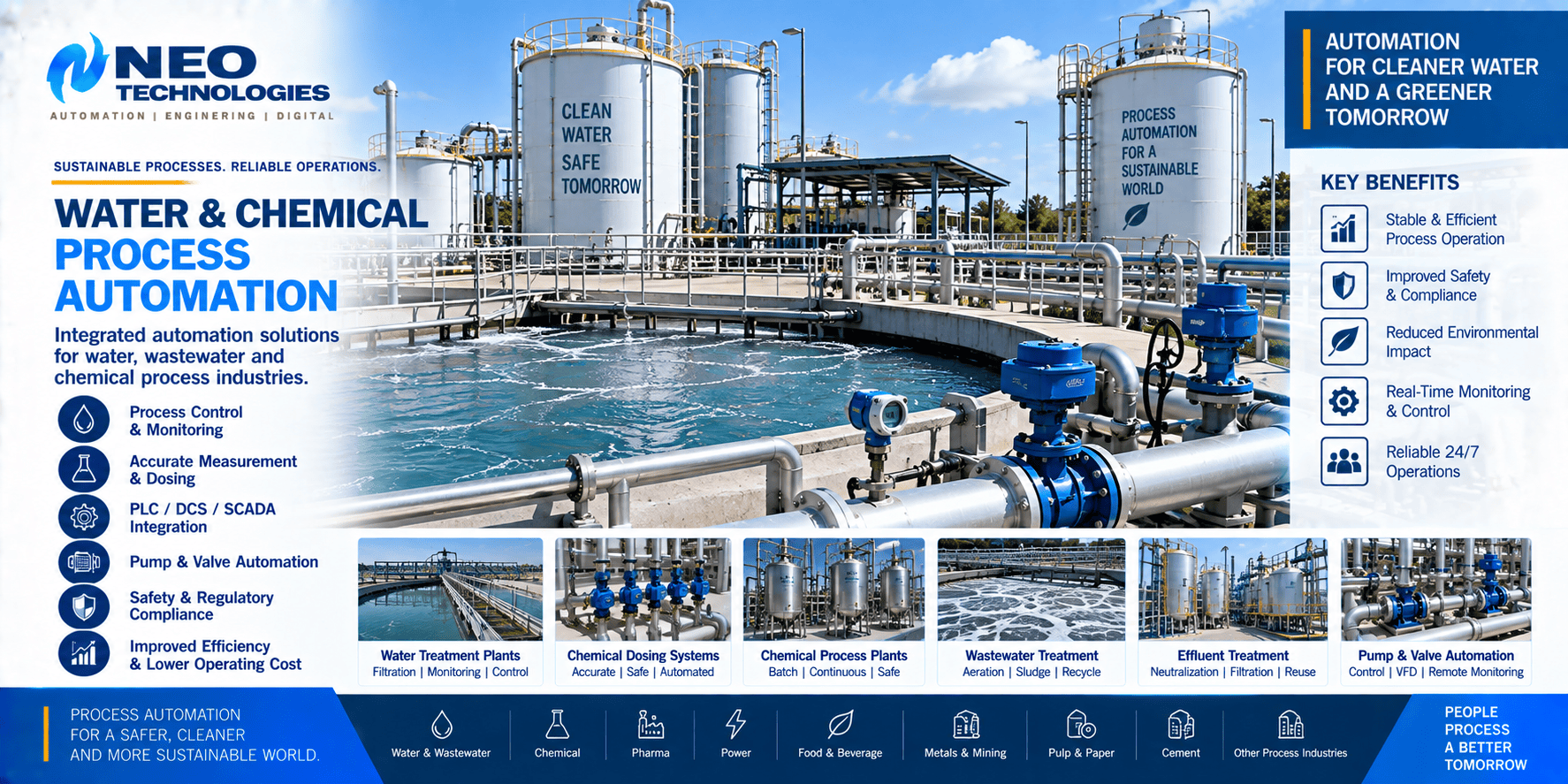
WTP, STP, ETP, RO, pumping and distribution systems.
Reactors, dosing, mixing, transfer and process control.
Process equipment, utilities and production monitoring.
Mixing, batching, filling, CIP and utilities.
Pumping, tank farms, metering and process monitoring.
Plant utilities, monitoring and auxiliary systems.
Dyeing, finishing, utilities, drives and process control.
Material handling, motor automation and process systems.
Conveyors, crushers, pumps and material handling.
Process control, drives, utilities and monitoring.
Production processes, utilities and plant monitoring.
Pumping, utilities, energy and remote monitoring.
Controllers, remote I/O, drives, instrumentation, SCADA servers and higher-level systems can exchange information through communication technologies appropriate to the installed equipment and plant architecture.
Connect automation data with edge systems, historians, dashboards and higher-level manufacturing applications to support plant visibility and operational analysis.
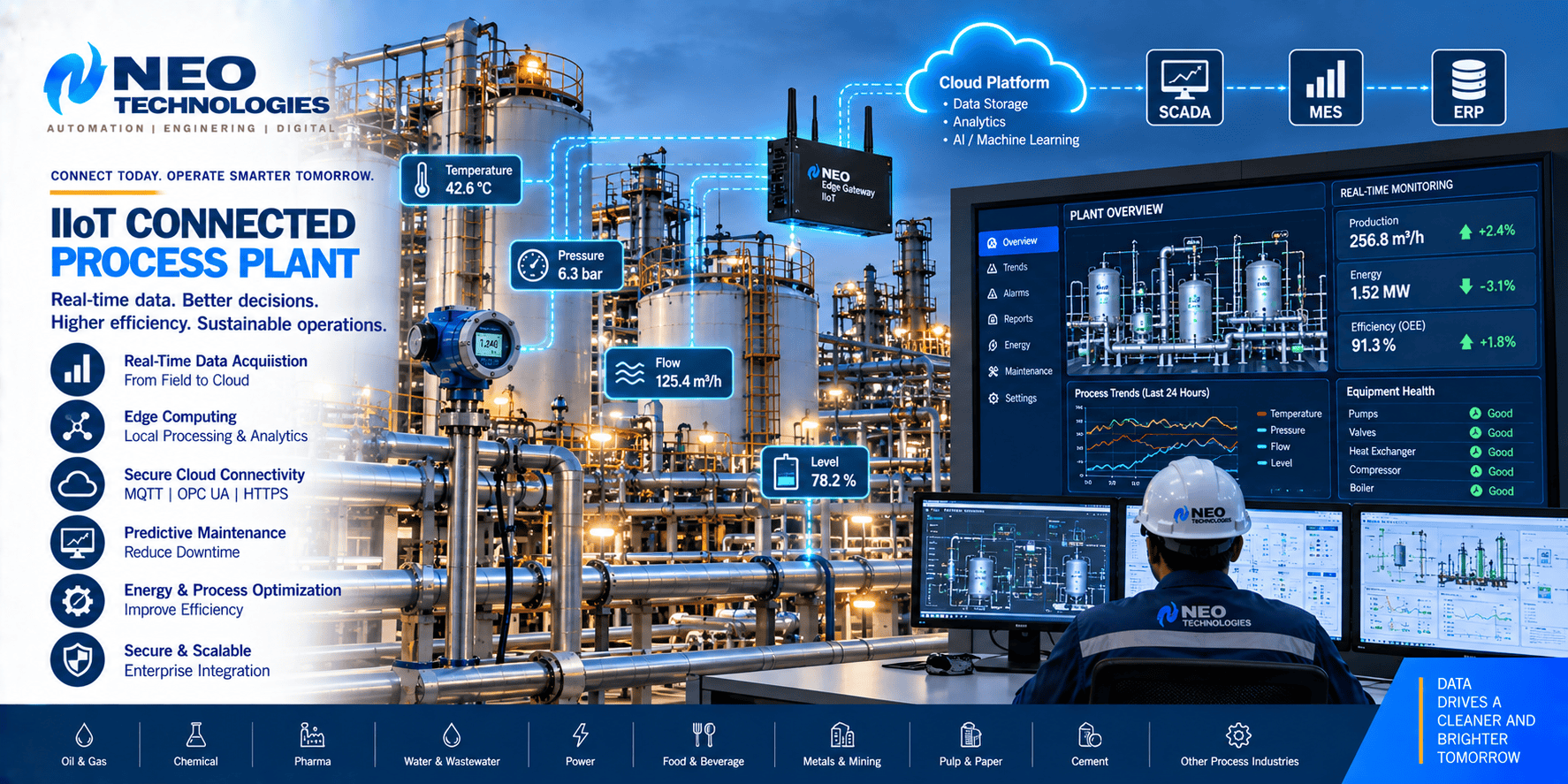
Collect selected process and equipment information from controllers and automation systems.
Present operating and production information through application-specific dashboards.
Store and analyze process values, events and operating information where required.
Collect relevant electrical and utility information for energy analysis.
Acquire selected equipment parameters to support maintenance analysis.
Exchange appropriate plant and production information with manufacturing systems.
New automation, modernization, SCADA and plant-data projects.
Automation engineering, control panels, instrumentation integration and commissioning support.
Control engineering for packaged process equipment and industrial machinery.
Production automation, utilities monitoring and plant digitalization.
Process sequence, equipment and operating philosophy review.
Instrumentation, valves and control-loop review.
Digital, analog, RTD, thermocouple and communication I/O planning.
Architecture, control logic, interlocks, sequences and diagnostics.
Graphics, alarms, trends, reports and historian integration.
Control circuits, layouts, BOM and terminal engineering.
Instrument selection, signal integration and loop engineering.
Software testing, FAT, loop checking, SAT and commissioning support.
Digital, analog and communication signal database.
Functional description and automation strategy.
Project-specific power, control and termination drawings.
Controller, SCADA and communication topology.
Process and equipment alarm definitions.
Interlock, trip and operational response information.
Project application backups according to agreed scope.
Application-specific operating and maintenance information.
Process automation requires coordination between field instrumentation, control systems, electrical engineering, operator systems and industrial communications.
Instrumentation, controllers, drives, valves and supervisory systems.
Control platforms selected around process and project requirements.
Integration across field, control, supervisory and information layers.
Engineering, testing, commissioning, modernization and integration.
PLC, HMI, drive and industrial control-panel engineering.
Explore PLC PanelsIntegration of controllers, instrumentation, networks, SCADA and industrial systems.
Explore IntegrationSupervisory monitoring, process control and manufacturing information integration.
Explore SCADA / DCS / MESWhether the requirement involves a process skid, utility, water system, production process or plant-wide automation, share your P&ID, I/O list, control philosophy, existing architecture or project requirements with Neo Technologies.
Discuss Your Automation Project Explore All SolutionsProcess automation uses industrial controllers, instrumentation, operator systems and communication technologies to monitor and control industrial processes.
PLCs are widely applied to machine, sequence and process control. DCS platforms are commonly applied to continuous or complex process plants using distributed control architectures. Platform selection depends on the application and project requirements.
Yes. Compatible PLC and SCADA platforms can exchange data using supported industrial communication protocols such as PROFINET, EtherNet/IP, Modbus TCP and OPC UA.
Existing relay logic, legacy PLCs, operator interfaces, drives and supervisory systems can be evaluated for migration or modernization.
Remote monitoring can be incorporated where appropriate to the plant network architecture, access controls and cybersecurity requirements.
Process automation can integrate pressure, flow, temperature, level and analytical instruments together with control valves and other field devices.
Project scope can include software testing, panel FAT, site support, loop checking, SAT, startup and commissioning.
Process automation is used across water, wastewater, chemical, pharmaceutical, food and beverage, energy, oil and gas, textile, cement, manufacturing and many other industrial sectors.