01
PLC & PAC
Controllers, distributed I/O, process logic, machine sequences and equipment interfaces.

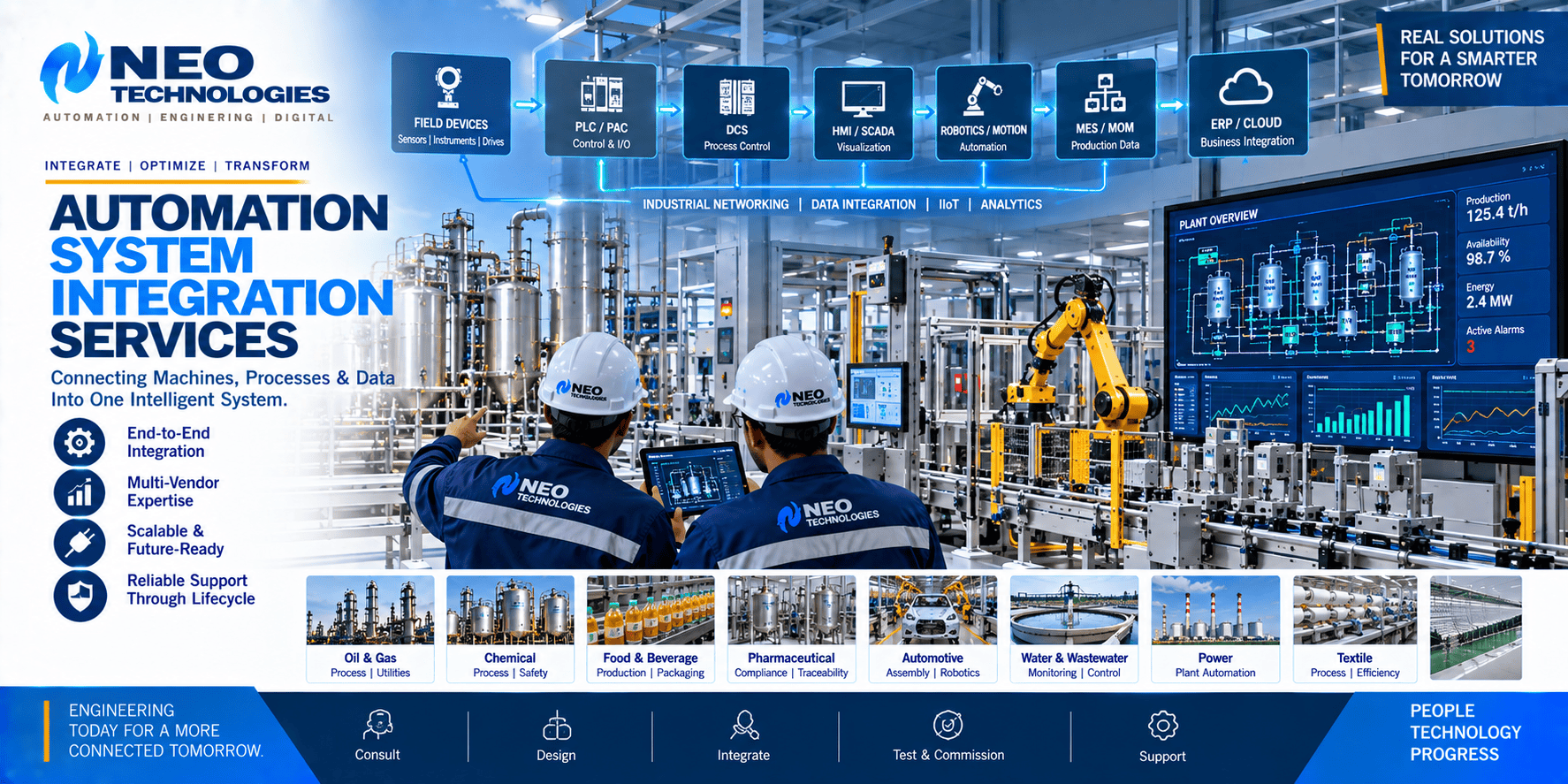
Neo Technologies provides industrial automation system integration for connecting plant-floor equipment, control systems, supervisory platforms and manufacturing information systems.
A successful integration project is more than connecting individual automation products. Controllers, field devices, drives, robots, HMI, SCADA, industrial networks and plant software need to exchange the correct information through an engineered architecture.
System integration connects automation technologies across multiple layers while preserving the functional role of each platform.
Industrial system integration creates structured communication between equipment, controllers, supervisory systems, manufacturing applications and enterprise platforms.
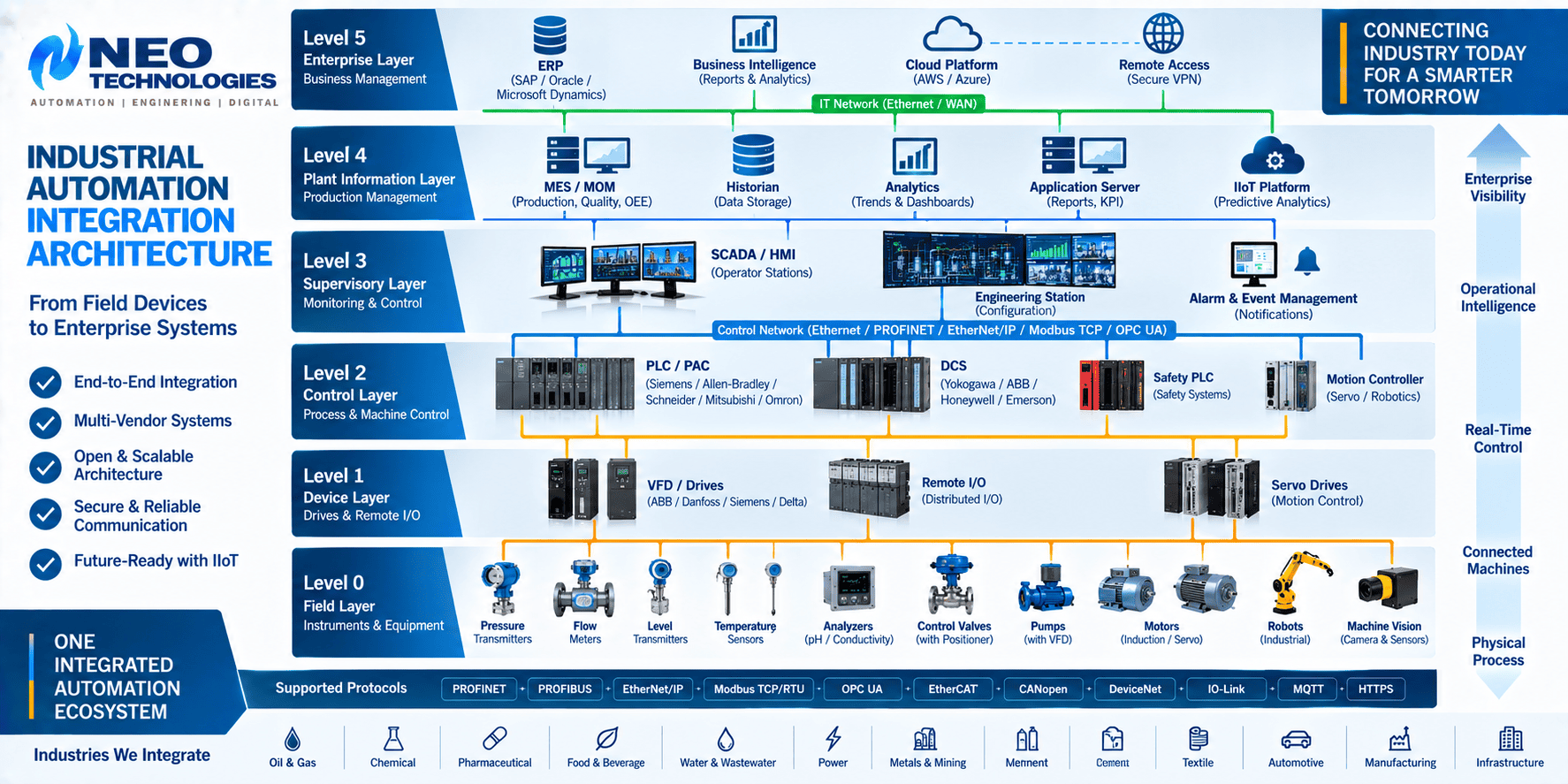
Integration scope can range from a single machine or process skid to multi-system plant automation and plant-to-enterprise connectivity.
Controllers, distributed I/O, process logic, machine sequences and equipment interfaces.
Distributed process-control systems, operator stations, field I/O and plant information systems.
Operator visualization, supervisory control, alarms, trends, reports and historical information.
Motor drives, servo systems and motion-control integration with automation platforms.
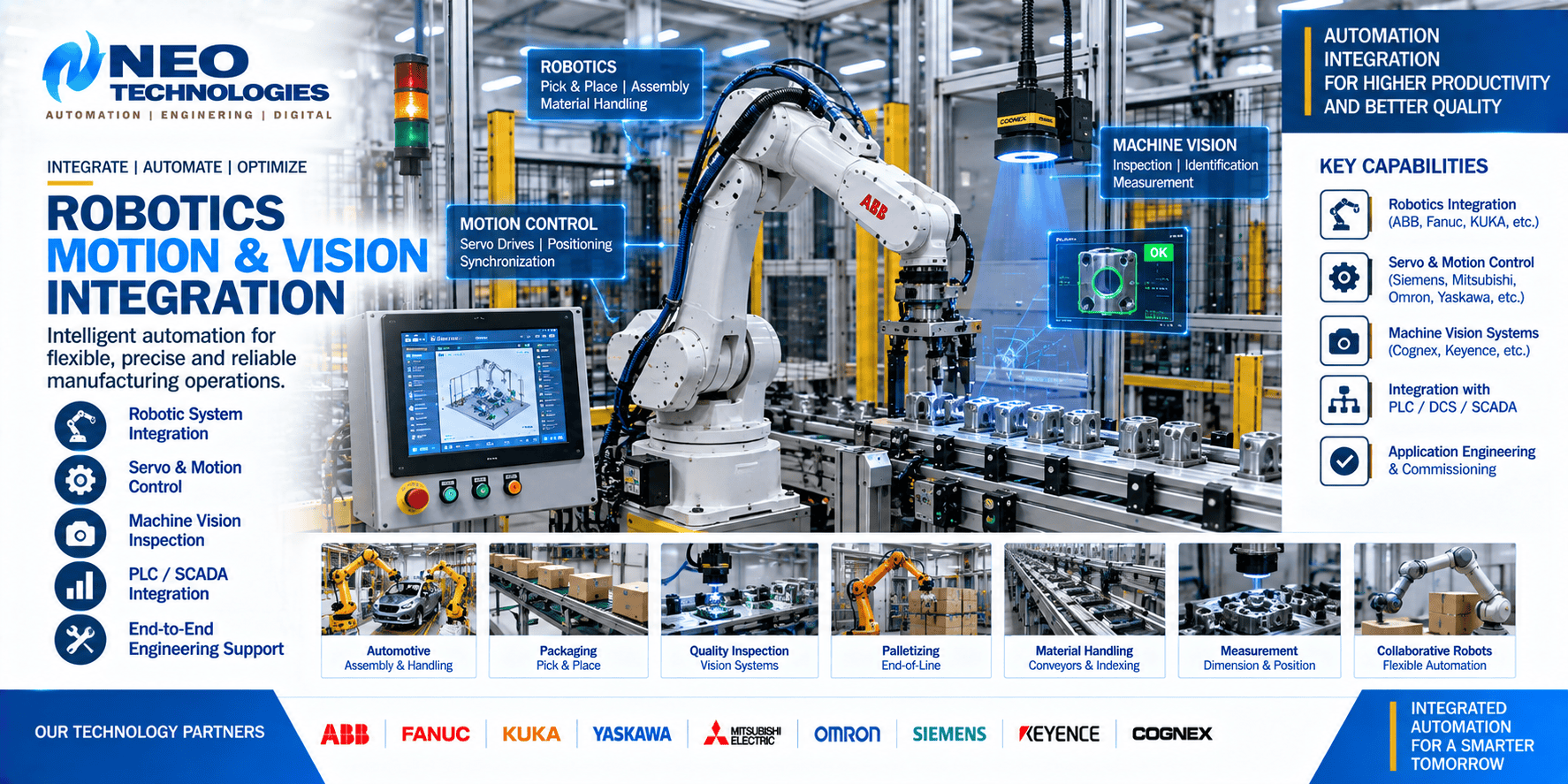
Robot integration with PLC, safety, tooling, conveyors and production equipment.
Vision inspection, identification, measurement and machine-control interfaces.
Industrial Ethernet, fieldbus, serial and plant-level communication integration.
Plant data integration with manufacturing information and connected industrial applications.
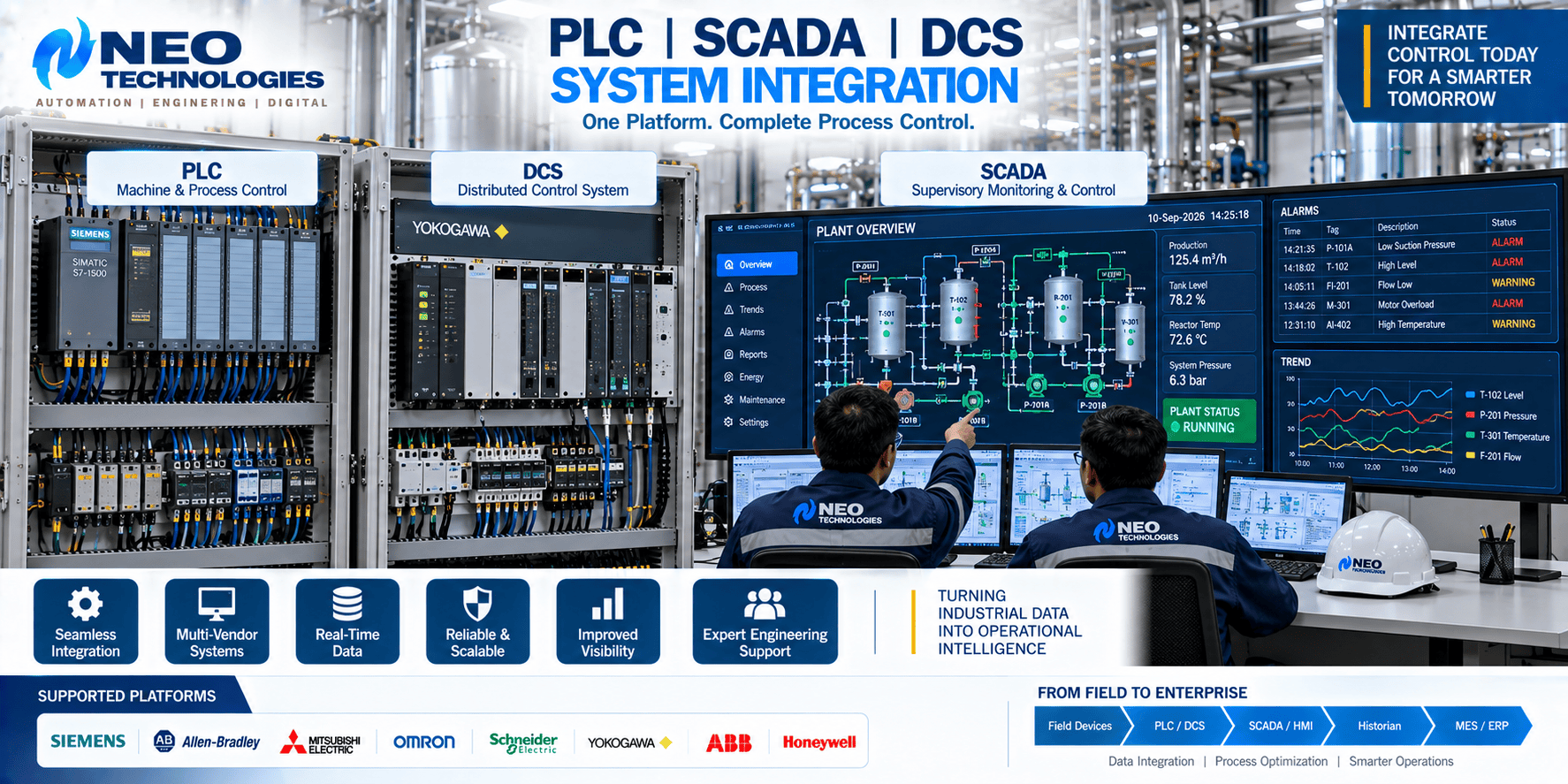
Integrate controllers and supervisory systems into a coordinated automation environment for machine, production and process applications.
Integrate robots, servo systems, vision equipment, controllers and safety functions into coordinated machine and production systems.
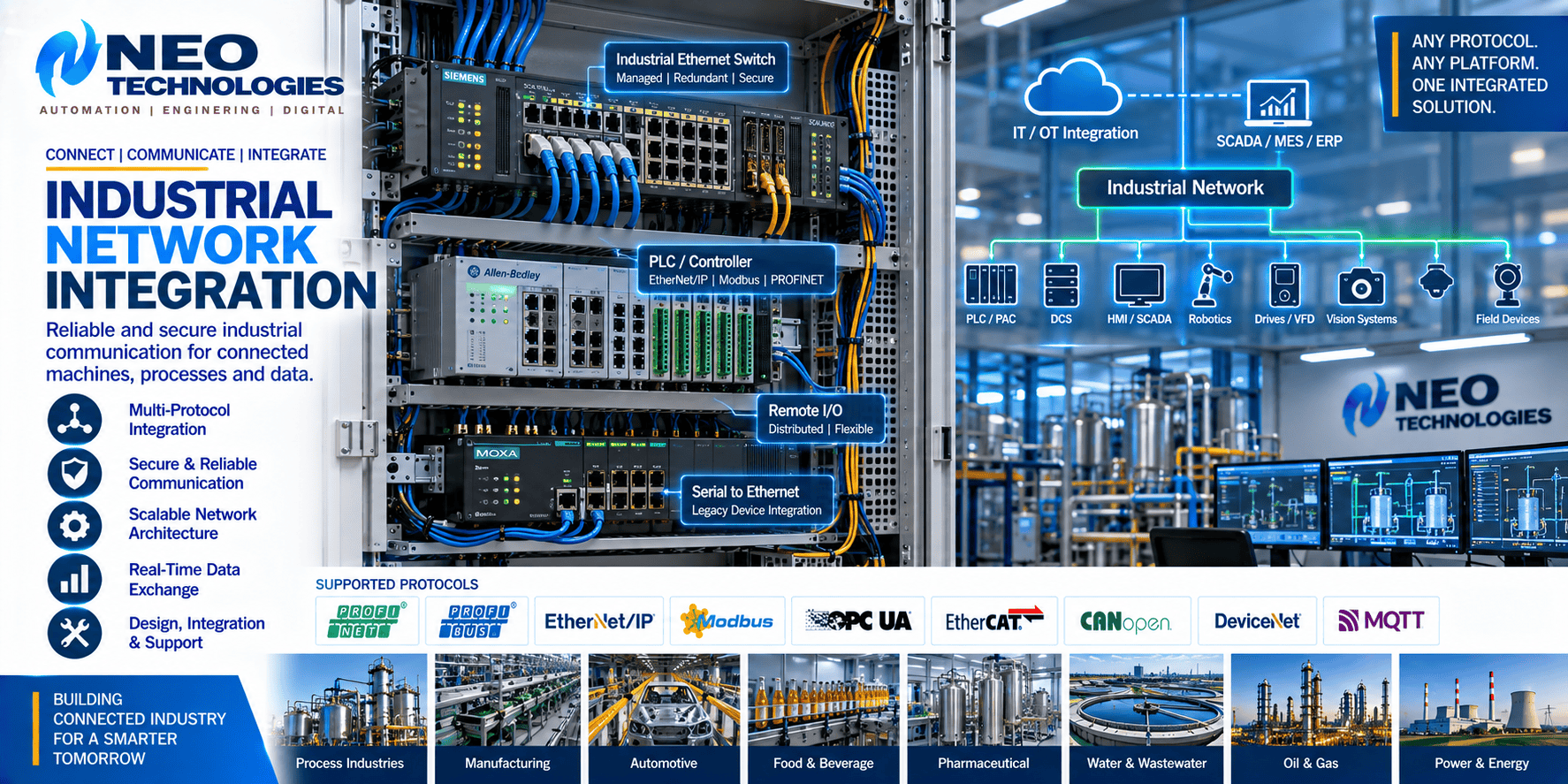
Industrial communication provides the data pathways between controllers, remote I/O, drives, HMI, SCADA, robots, vision equipment and higher-level systems.
Connect selected plant-floor and manufacturing information with operational and enterprise applications through structured data-integration layers.
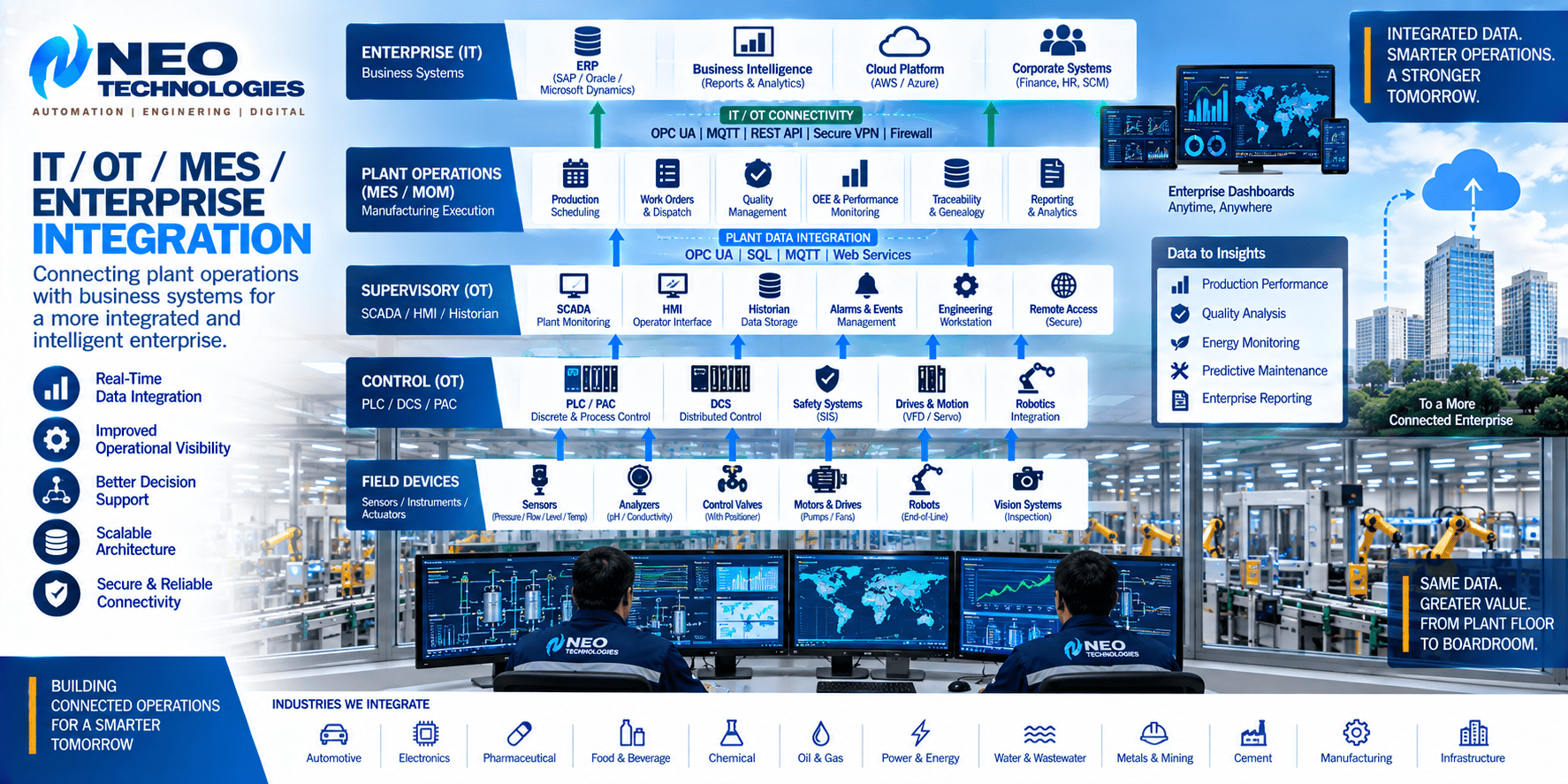
Acquire and store selected plant values, equipment data, events and operating information.
Exchange appropriate production and operational data with manufacturing execution applications.
Connect relevant production status, counts, parameters and operational information.
Integrate production identifiers and process information where required by the application.
Present selected plant and production information through application-specific dashboards.
Exchange agreed manufacturing information with appropriate higher-level business applications.
System-integration engineering can support discrete machines, production lines, process systems, utilities and connected manufacturing applications.
Electronics manufacturing combines production equipment, inspection systems, identification, material movement and manufacturing data that can require coordinated integration.
Integration scope can include interfaces between production equipment, inspection stations, PLC systems, identification devices, line controls, traceability applications and manufacturing information systems.
Existing control systems can be assessed for phased migration, controller replacement, HMI/SCADA upgrades, network integration and modernization.
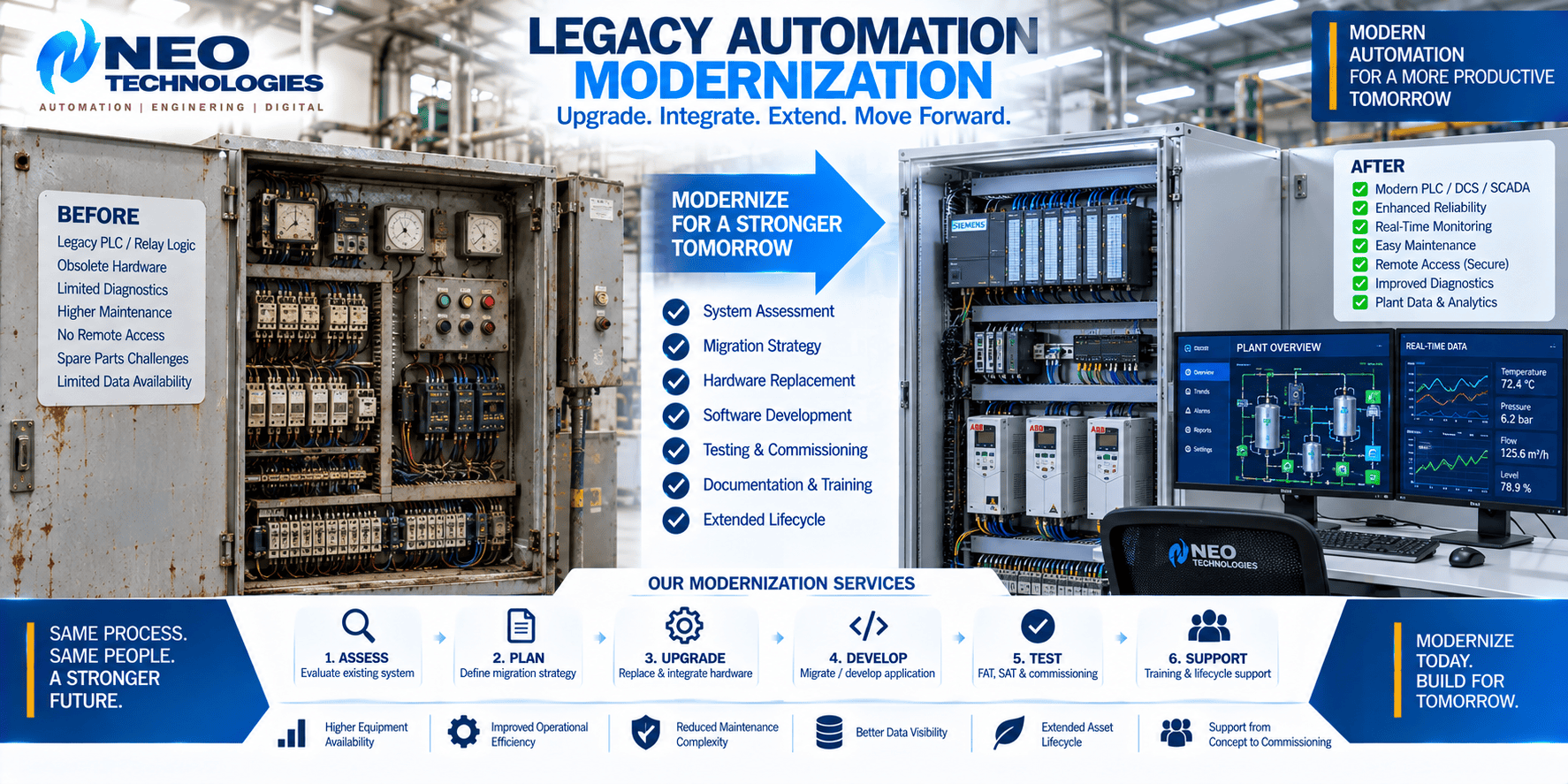
Review existing controllers, I/O, panels, communication, operator systems and available documentation.
Develop an application-specific strategy for replacement, reuse and integration.
Replace or migrate legacy controller hardware and application software where appropriate.
Modernize operator interfaces, supervisory applications and associated communication.
Integrate existing equipment with appropriate modern industrial communication infrastructure.
Test migrated systems and support site integration, startup and handover.
Assembly, handling, robotics, vision and production systems.
Production equipment, inspection and manufacturing-data integration.
Process equipment, production systems and plant utilities.
Processing, packaging, handling and production automation.
Process control, instrumentation and plant monitoring.
Pumping, treatment, instrumentation and SCADA systems.
Process equipment, pumping, monitoring and control systems.
Plant monitoring, utilities and auxiliary automation.
Material handling, drives, equipment and process systems.
Material handling, motors, process and supervisory control.
Machine automation, drives, process systems and utilities.
Machines, production lines, utilities and connected operations.
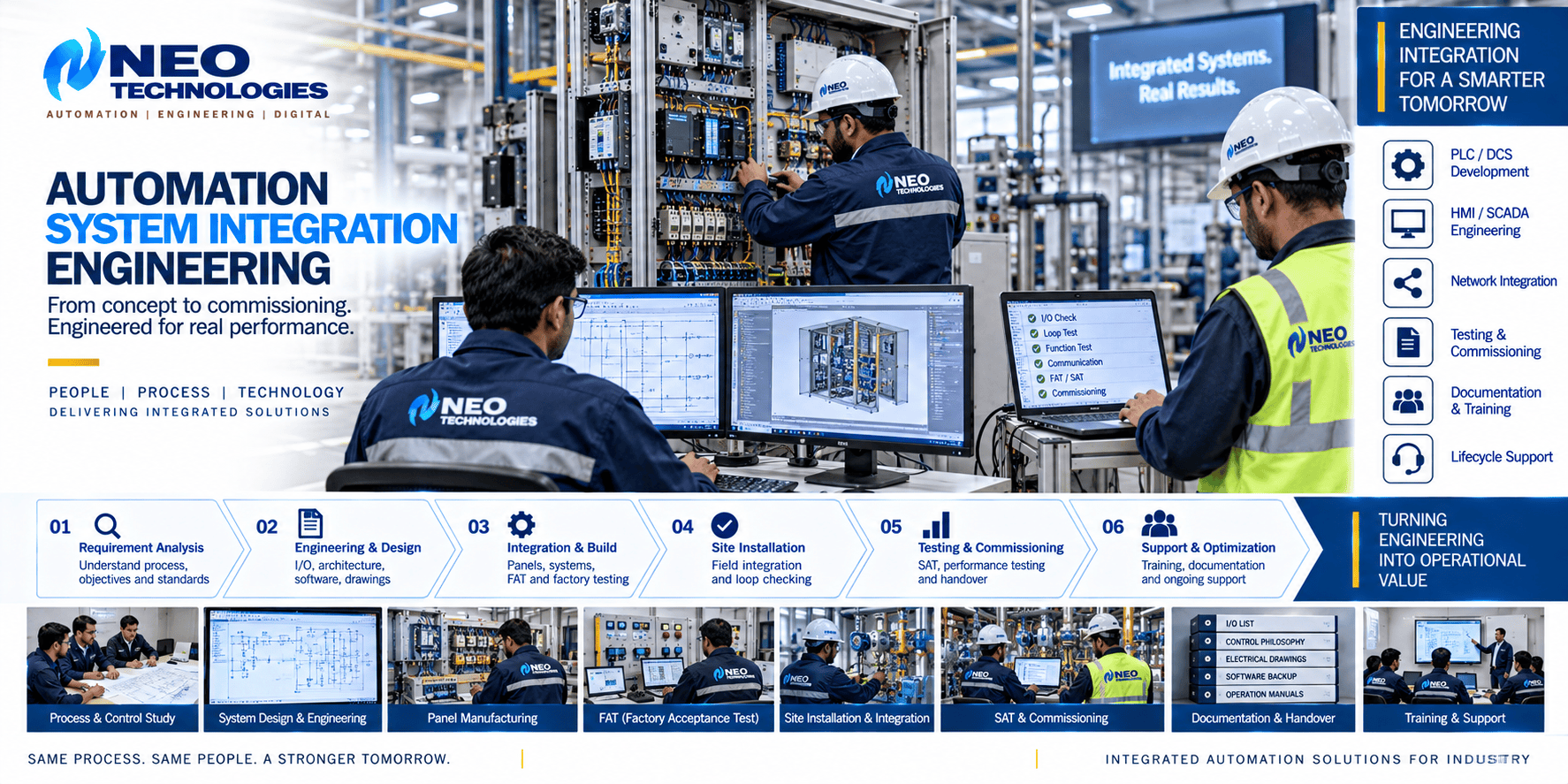
Integration projects require coordination between electrical engineering, automation software, industrial communication, equipment interfaces and site execution.
Control, communication and system-level architecture according to project scope.
Digital, analog, communication and equipment signal information.
Functional descriptions, sequences, interlocks and control requirements.
Project-specific control, power and termination documentation.
Communication topology and system connectivity documentation.
Project application backups according to the agreed project scope.
Applicable FAT, SAT and functional test records.
Application-specific operating and engineering documentation.
The objective of system integration is to make different industrial technologies work together as one coordinated automation environment.
Field, control, supervisory, manufacturing and information systems considered together.
Integration based on equipment capabilities, communication requirements and project standards.
Automation software, control panels, instrumentation and industrial communication within one project framework.
Support for new systems as well as migration and integration of existing automation assets.
PLC, DCS, SCADA, instrumentation, control valves and process-control engineering.
Process AutomationPLC, HMI, servo, robotics, machine vision and connected machine solutions.
OEM Machine SolutionsIndustrial communication, network architecture and automation connectivity.
Industrial NetworkingPLC, HMI, drive and industrial control-panel engineering.
PLC Control PanelsSupervisory monitoring, process control and manufacturing information integration.
SCADA / DCS / MESMobile controllers, CAN/J1939, HMI, hydraulics, sensors and vehicle automation.
Off-Highway AutomationShare your existing architecture, equipment list, I/O, network topology, process requirements or integration objectives with Neo Technologies. We can evaluate the interfaces required between machines, controllers, supervisory systems and manufacturing applications.
Discuss Your Integration ProjectIndustrial automation system integration connects controllers, field devices, machines, drives, robots, operator systems, industrial networks and plant software so that the required information and control functions can operate across one engineered system.
Different automation platforms can often be integrated when compatible communication interfaces or suitable gateways are available. The appropriate method depends on the installed hardware, protocols and project requirements.
Yes, where the selected platforms provide compatible communication interfaces. Integration can use industrial protocols and data interfaces such as PROFINET, EtherNet/IP, Modbus and OPC UA where supported.
Existing PLCs, relay systems, HMI, SCADA, drives and communication infrastructure can be evaluated for migration, replacement or integration with newer systems.
Yes. Industrial robots, servo systems and machine-vision equipment can be integrated with PLC-based machine control where suitable interfaces are available.
IT/OT integration connects selected operational technology data from industrial automation systems with manufacturing or enterprise information applications through appropriate data interfaces and architecture.
Yes. Selected controller, SCADA, historian and production data can be exchanged with MES or MOM applications where the systems provide suitable interfaces.
Depending on the agreed project scope, services can include software testing, communication testing, FAT, site integration, SAT, startup and commissioning support.
Useful inputs can include equipment lists, controller details, I/O lists, network architecture, electrical drawings, communication protocols, process descriptions and the required interfaces between systems.