01
PLC Programming
Automatic sequences, manual modes, interlocks, recipes, alarms, diagnostics and machine logic.


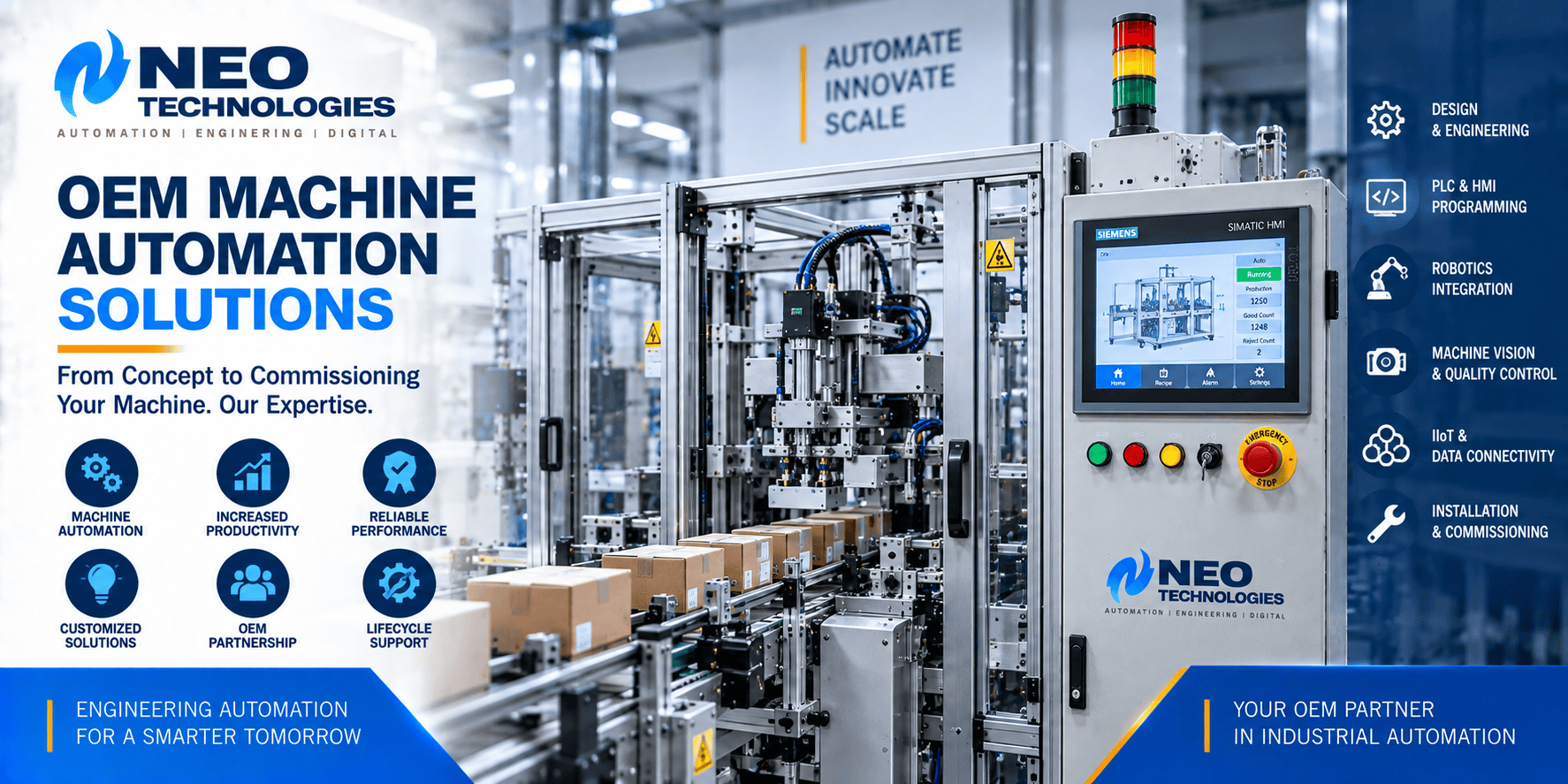
Neo Technologies provides automation engineering solutions for OEMs, machine builders, special-purpose machines and automated production equipment.
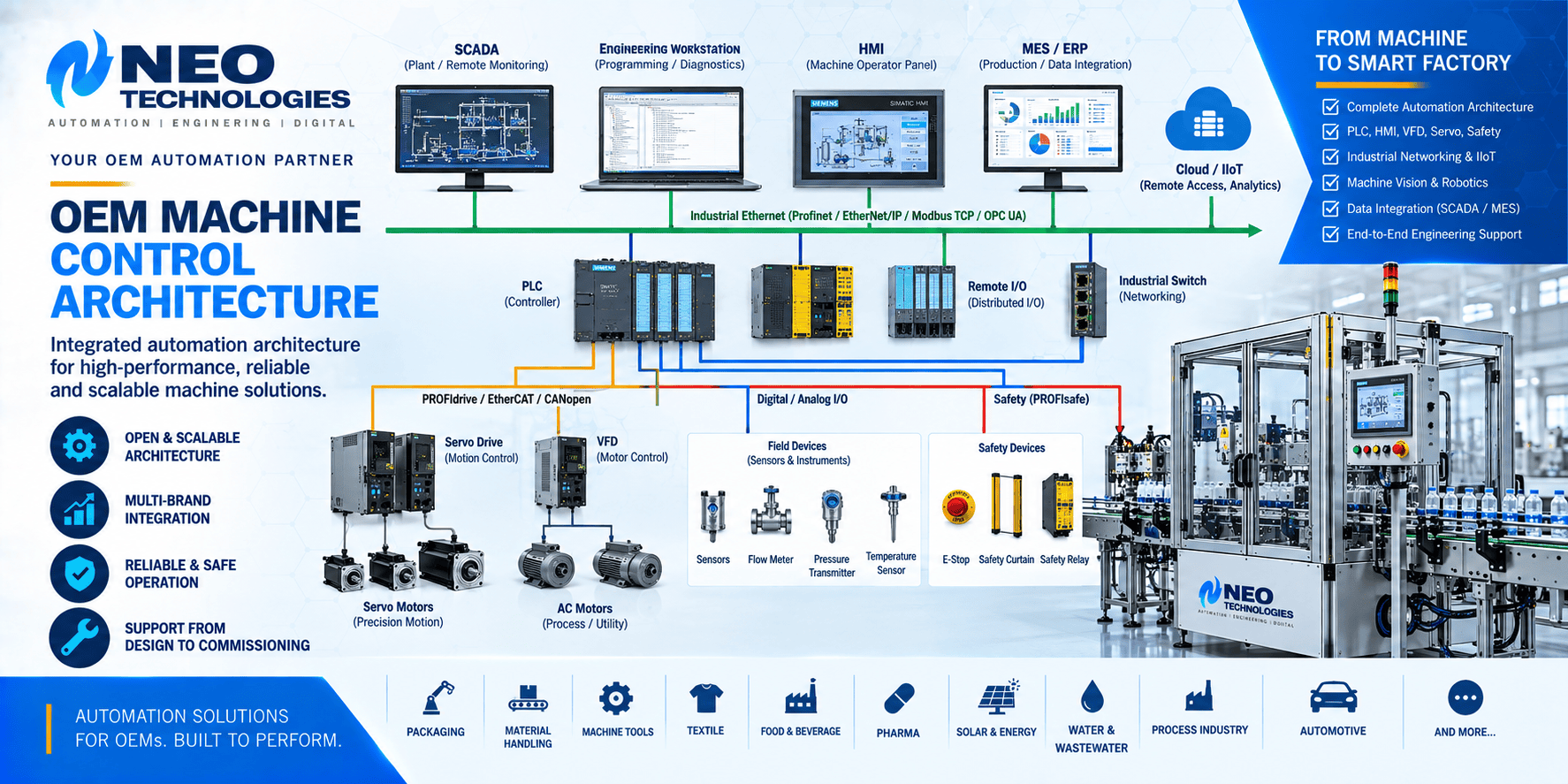
The machine-control architecture can combine PLCs, operator interfaces, electrical controls, servo motion, variable-frequency drives, sensors, pneumatics, industrial networking, machine vision, robotics, safety and digital connectivity.
Instead of treating PLC, motion, HMI, robotics and connectivity as isolated technologies, the control architecture can be engineered as one coordinated machine platform.
Discuss Your MachineConnect machine sensors, controllers, motion systems, operator interfaces and higher-level manufacturing systems through one coordinated automation architecture.
Support can cover individual automation activities or a complete machine-control package according to the project requirement.
Automatic sequences, manual modes, interlocks, recipes, alarms, diagnostics and machine logic.
Machine overview, commands, recipes, alarms, counters, diagnostics and maintenance interfaces.
Position, velocity, torque, indexing and coordinated multi-axis machine motion.
Variable-speed control for conveyors, feeders, pumps, rollers, fans and machine mechanisms.
Electrical architecture, control circuits, I/O engineering, panel layout and documentation.
PLC, servo, VFD, machine-control and remote-I/O panel engineering.
Inspection, presence detection, measurement, identification and reject-control integration.
Robot integration for handling, assembly, tending, palletizing and automated operations.
Machine data acquisition, dashboards, remote monitoring and plant-system connectivity.
Automation platforms can be developed for standalone OEM machines, special-purpose equipment and complete integrated production systems.
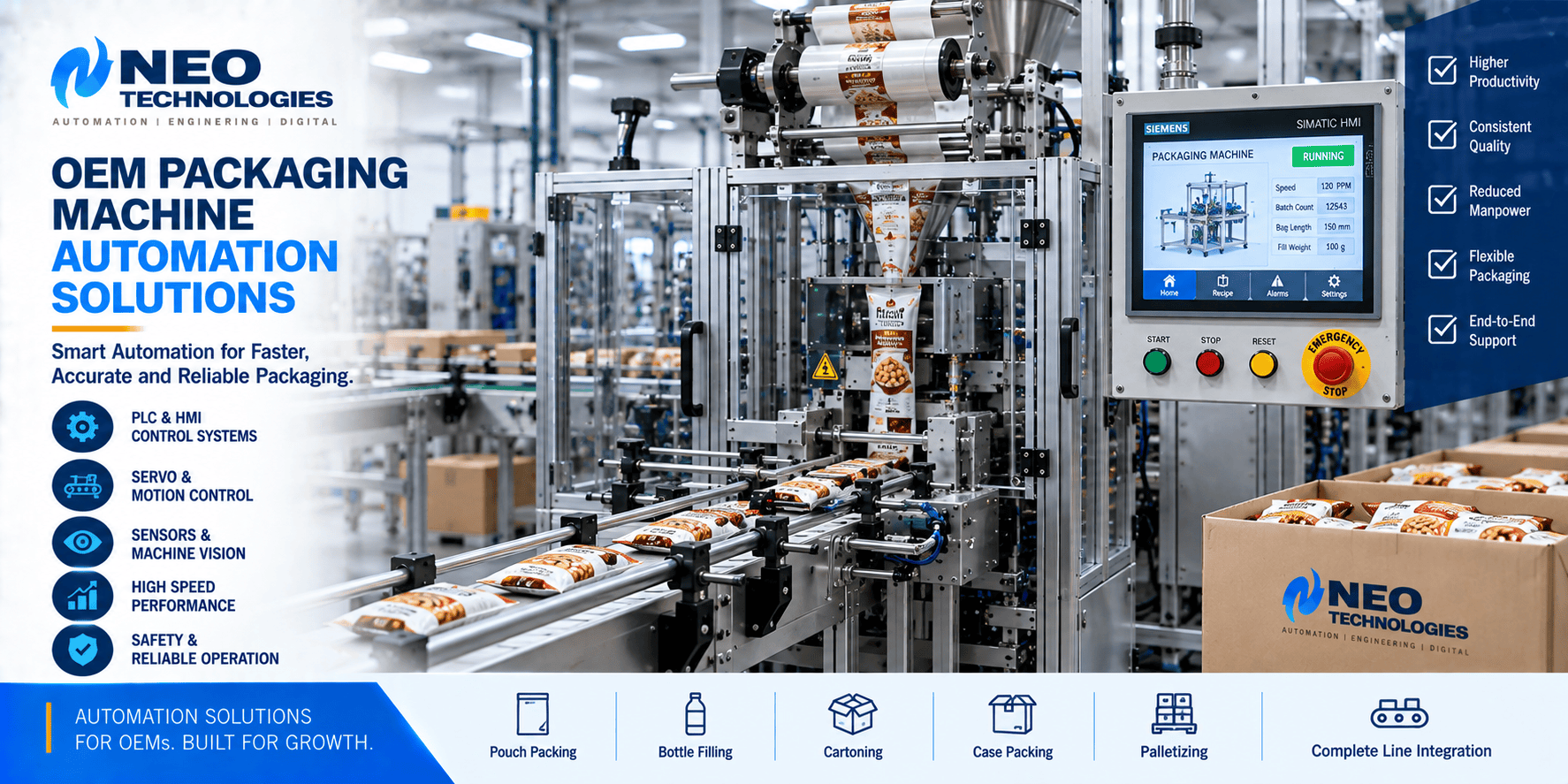
The control architecture is developed around the machine mechanics, operating sequence, process, motion requirements and required interfaces.
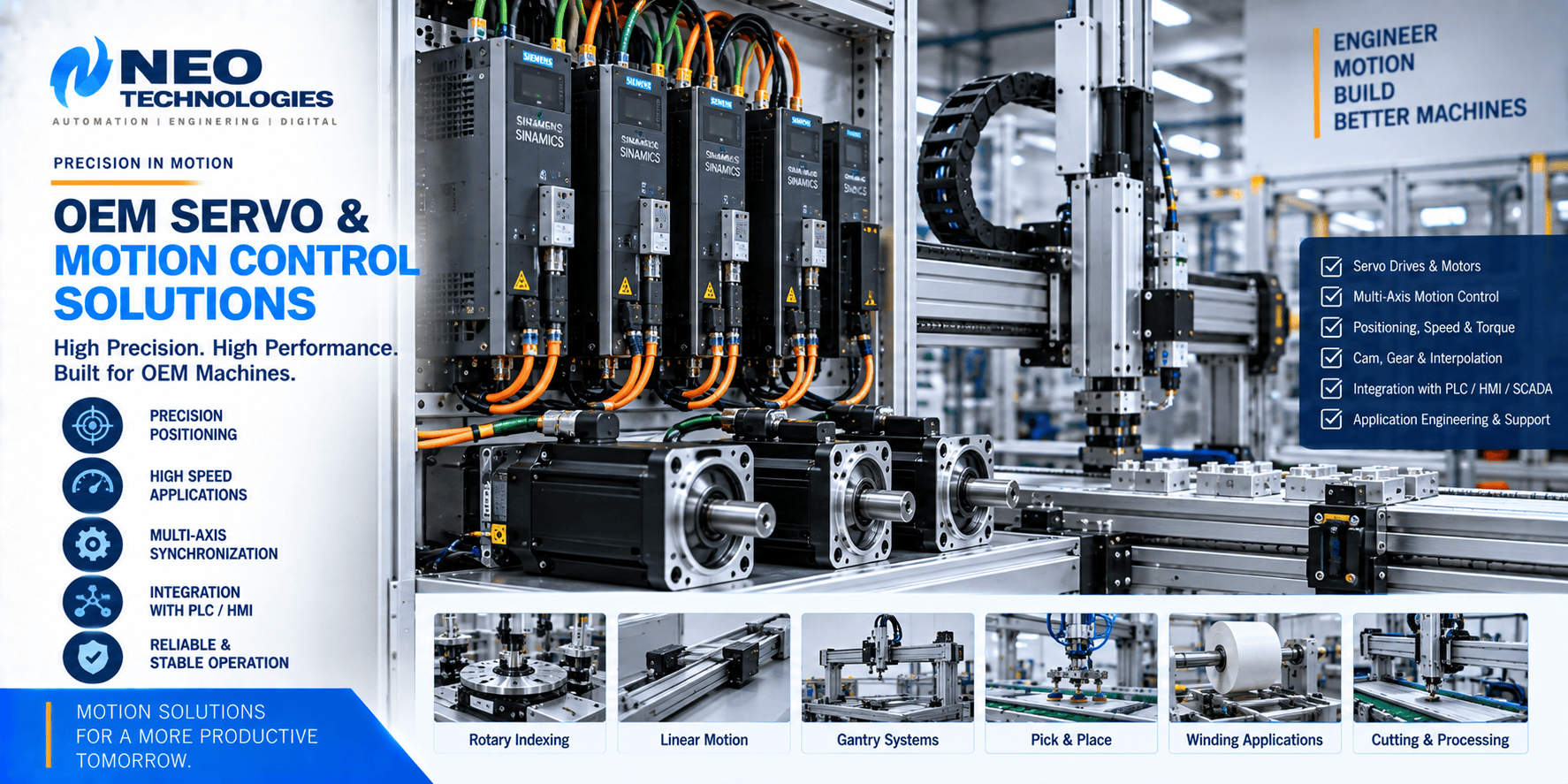
Precision machinery can require coordinated control of position, velocity, torque and multiple synchronized machine axes.
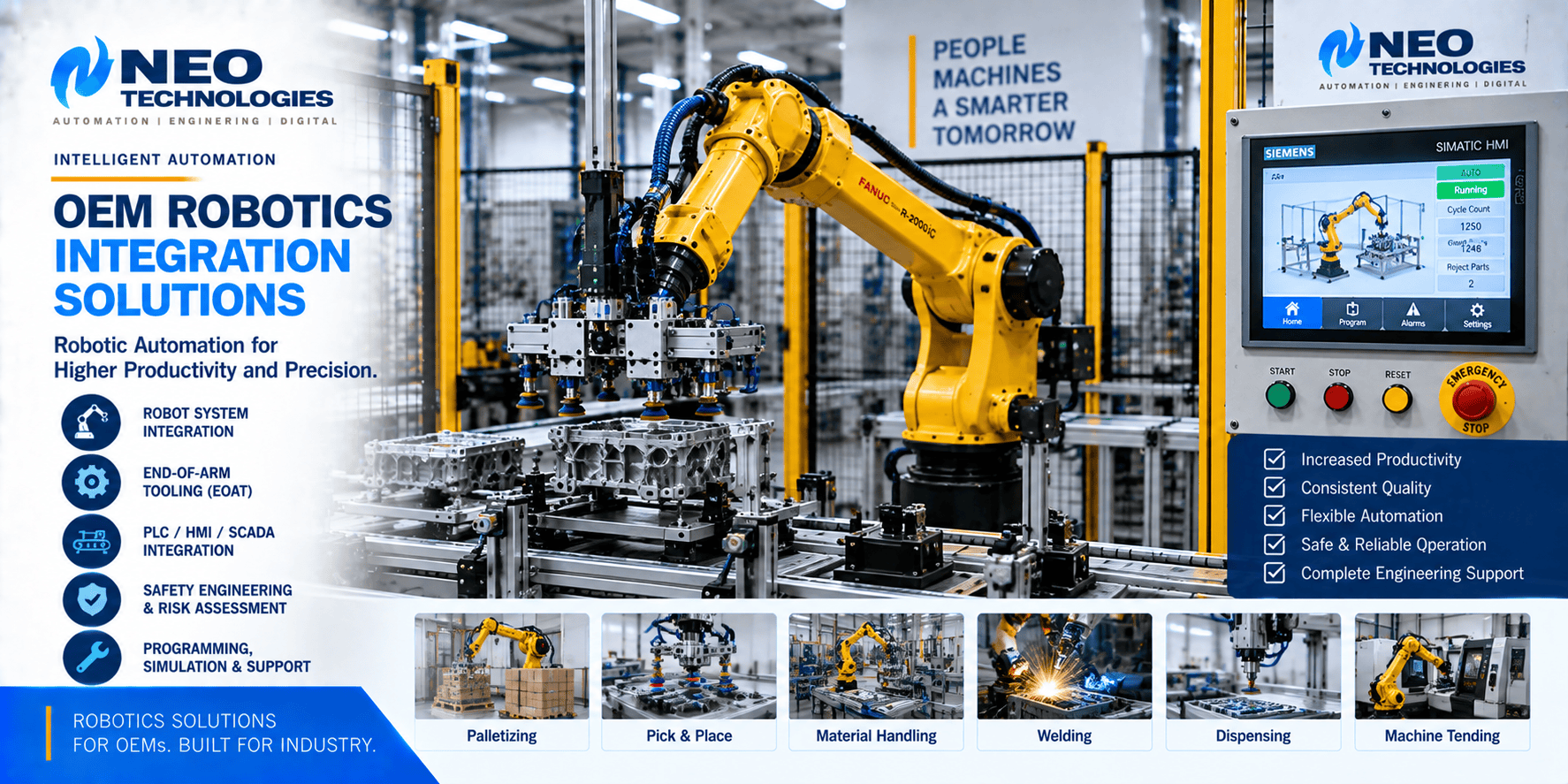
Robots can be integrated with PLC logic, machine safety, conveyors, tooling, fixtures and vision systems to form one coordinated machine sequence.
Machine vision can be integrated directly into the machine sequence for inspection, verification, identification, measurement and automatic rejection.
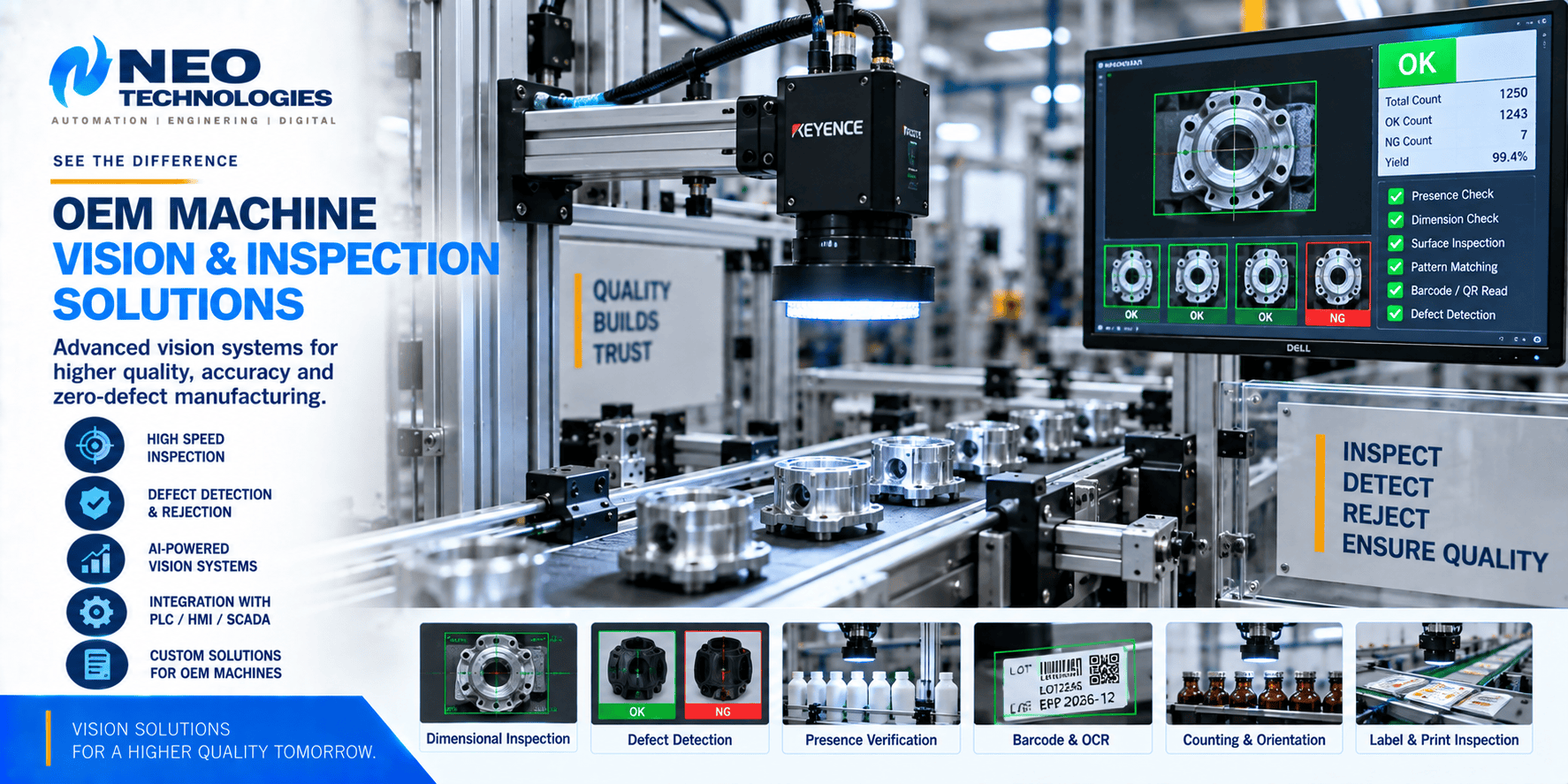
Verify required components before the machine continues its cycle.
Check component position and orientation before assembly or processing.
Evaluate application-specific dimensions and product geometry.
Read product identification codes for machine and traceability functions.
Read or verify printed characters, labels and production information.
Detect configured visual defects and interface with rejection systems.
Provide position or orientation information to robotic handling systems.
Associate inspection data with product or production information where required.
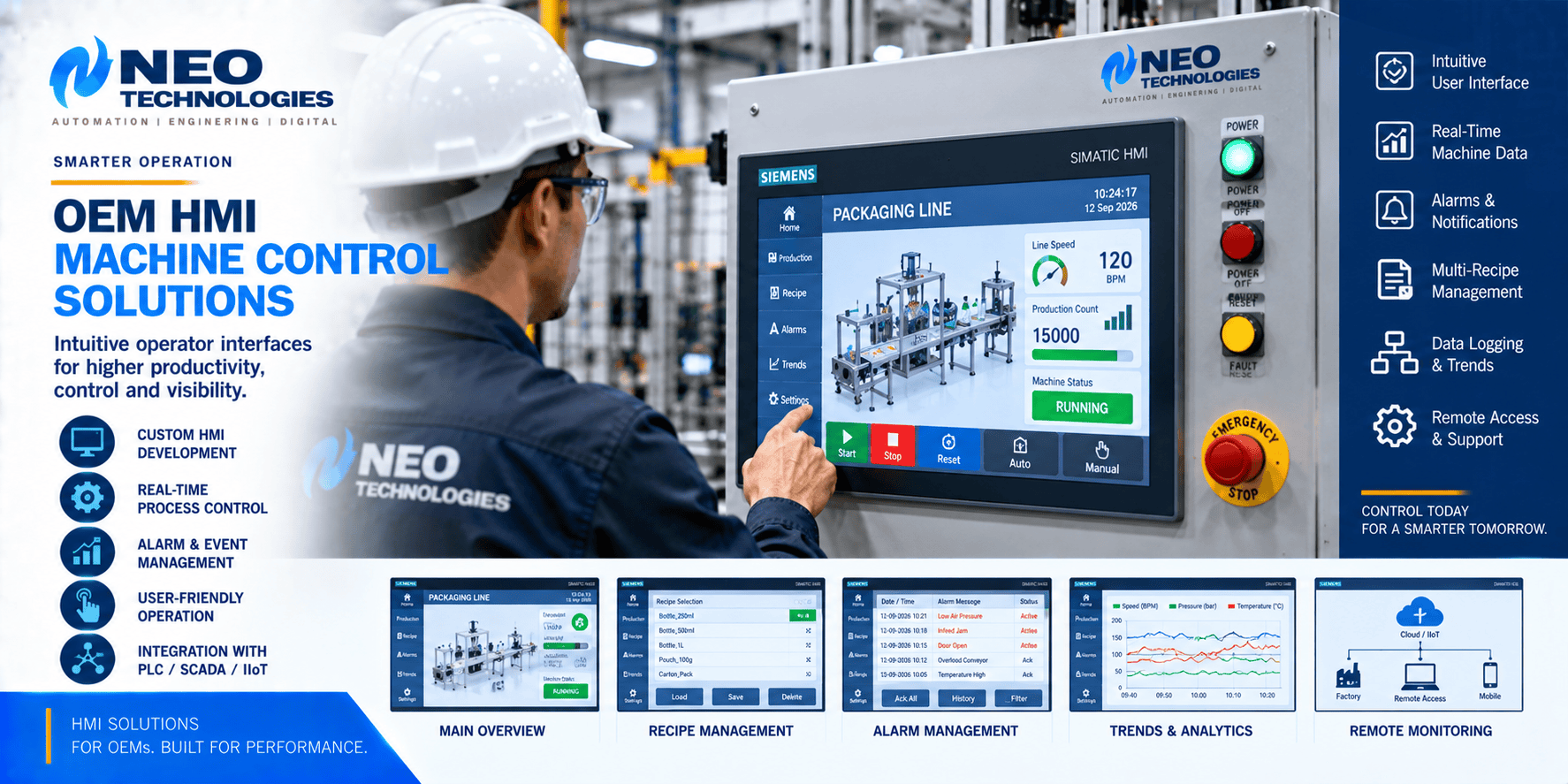
A well-structured operator interface should make the machine easier to operate, configure, troubleshoot and maintain.
Machine-safety architecture should be developed around the machine hazards, mechanical design, operating modes and project requirements.
Emergency-stop functions integrated into the machine safety architecture.
Safety switches and interlocking for guarded machine areas.
Personnel-detection devices for appropriate machine applications.
Safety relays or programmable safety controllers according to requirements.
Drive Safe Torque Off functions where supported and required.
Monitoring of appropriate safety devices and machine circuits.
Application-dependent drive and motion safety functions.
Clear machine-safety status and diagnostic information.
Connect PLCs, HMI, remote I/O, servo drives, VFDs, robots, vision systems and plant networks using protocols appropriate to the selected equipment.
Add machine-data acquisition and connectivity so equipment can exchange production and diagnostic information with supervisory and manufacturing systems.
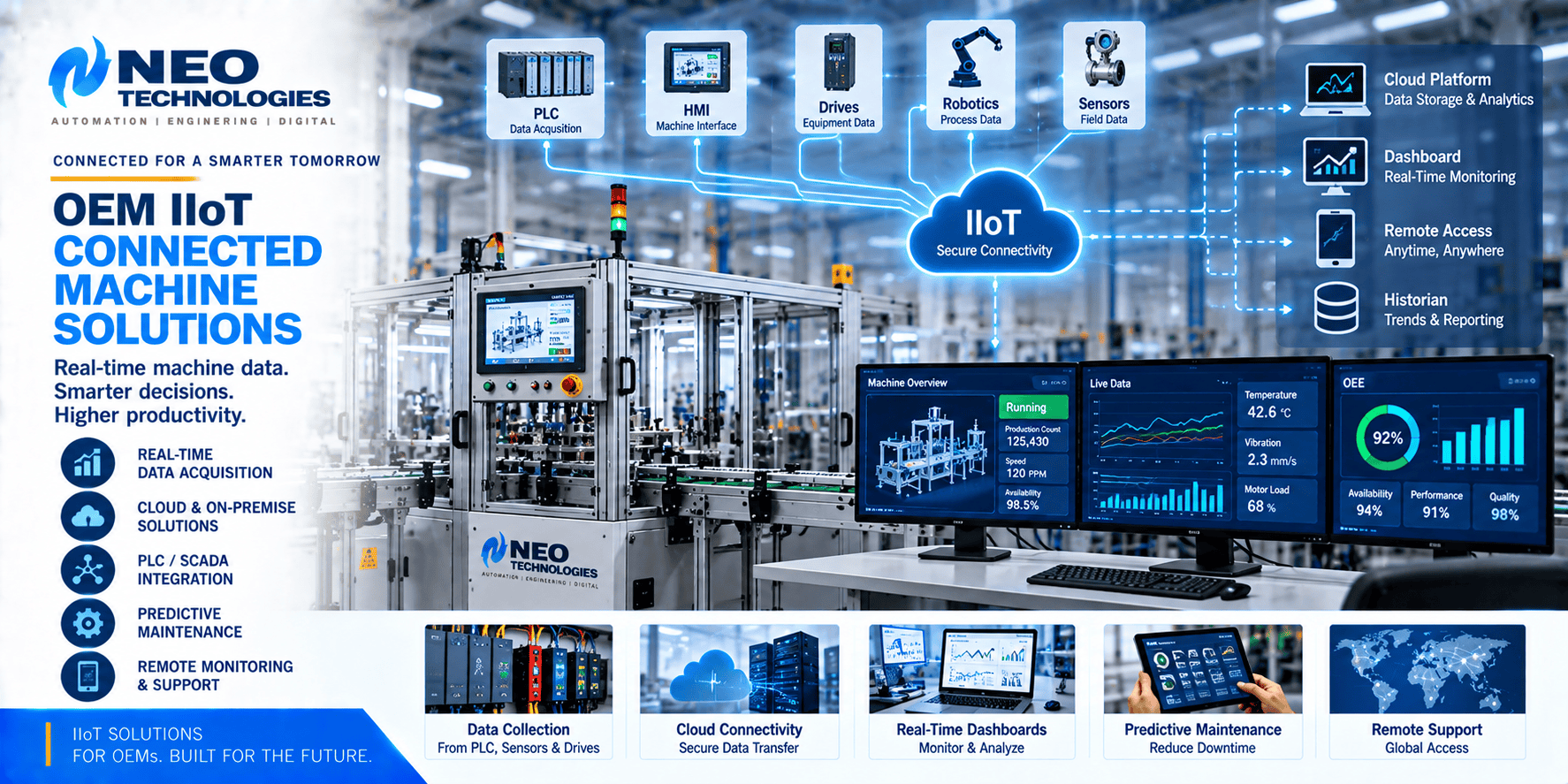
Provide authorized remote access to machine status and diagnostic information where required.
Collect counts, cycle times, operating status, reject information and downtime data.
Record machine events and fault history for operational analysis.
Provide machine data that can support availability, performance and quality analysis.
Collect selected machine, motor, drive and operating parameters for maintenance applications.
Exchange appropriate production information with higher-level manufacturing systems.
Automation engineering can support machine builders from initial architecture through prototype development, repeat-machine standardization and modernization.
Review sequence, I/O, motion and automation architecture.
Select PLC, HMI, servo, VFD, I/O, sensors and communication hardware.
Develop machine schematics, panel architecture and BOM.
PLC, HMI, motion, networking and machine diagnostic software.
Automation development and debugging during the first machine build.
Reusable control architecture, software blocks and HMI templates.
Modernization of existing PLC, HMI, drive and machine controls.
Machine testing, debugging, startup and production support.
Machine input and output information.
Power and control schematics according to project scope.
Control-panel component arrangement and engineering layout.
Automation and electrical component bill of materials.
PLC project backup according to agreed project deliverables.
Operator-interface project backup where included.
Servo and VFD parameter information where applicable.
Application-specific operating and engineering records.
Machine automation involves more than writing PLC logic. The control system must coordinate electrical, software, motion, operator and communication requirements.
PLC, HMI, drives, servo, networking, vision and robotics.
Automation architecture developed around machine requirements.
Architecture adaptable from simple machines to multi-axis systems.
Development, integration, commissioning, retrofit and support.
PLC, HMI, drive and industrial control-panel engineering.
Explore PLC PanelsIntegrate field devices, controllers, supervisory systems and plant networks.
Explore IntegrationIndustrial communication and connectivity between automation equipment.
Explore NetworkingSend your machine concept, sequence of operation, I/O requirements, electrical drawings or existing automation architecture to discuss the PLC, HMI, motion, control-panel and connectivity solution.
Discuss Your OEM Automation Requirement Explore All SolutionsOEM machine automation involves integrating controllers, operator interfaces, sensors, drives, motion systems and other automation technologies into industrial machines.
Automation support can cover an individual activity such as PLC programming or a broader package involving HMI, motion, electrical engineering and system integration.
Servo systems can be integrated for positioning, indexing, synchronized motion, electronic gearing and other precision-motion applications.
Robots can exchange control and status information with the machine controller and coordinate with conveyors, tooling, fixtures, vision systems and other equipment.
Special-purpose machines can use PLC, HMI, servo, VFD, sensors, pneumatics, vision, robotics and industrial communication depending on the application.
Existing equipment can be evaluated for modernization of PLC, HMI, drives, servo systems and machine electrical controls.
Depending on the selected equipment and plant architecture, machine information can be exchanged with supervisory and manufacturing systems using appropriate industrial communication technologies.
OEM machine platforms can use standardized electrical architectures, PLC software structures, HMI templates and parameter conventions to support repeat manufacturing.