Field
Sensors, transmitters, valves, motors, actuators and electrical devices.
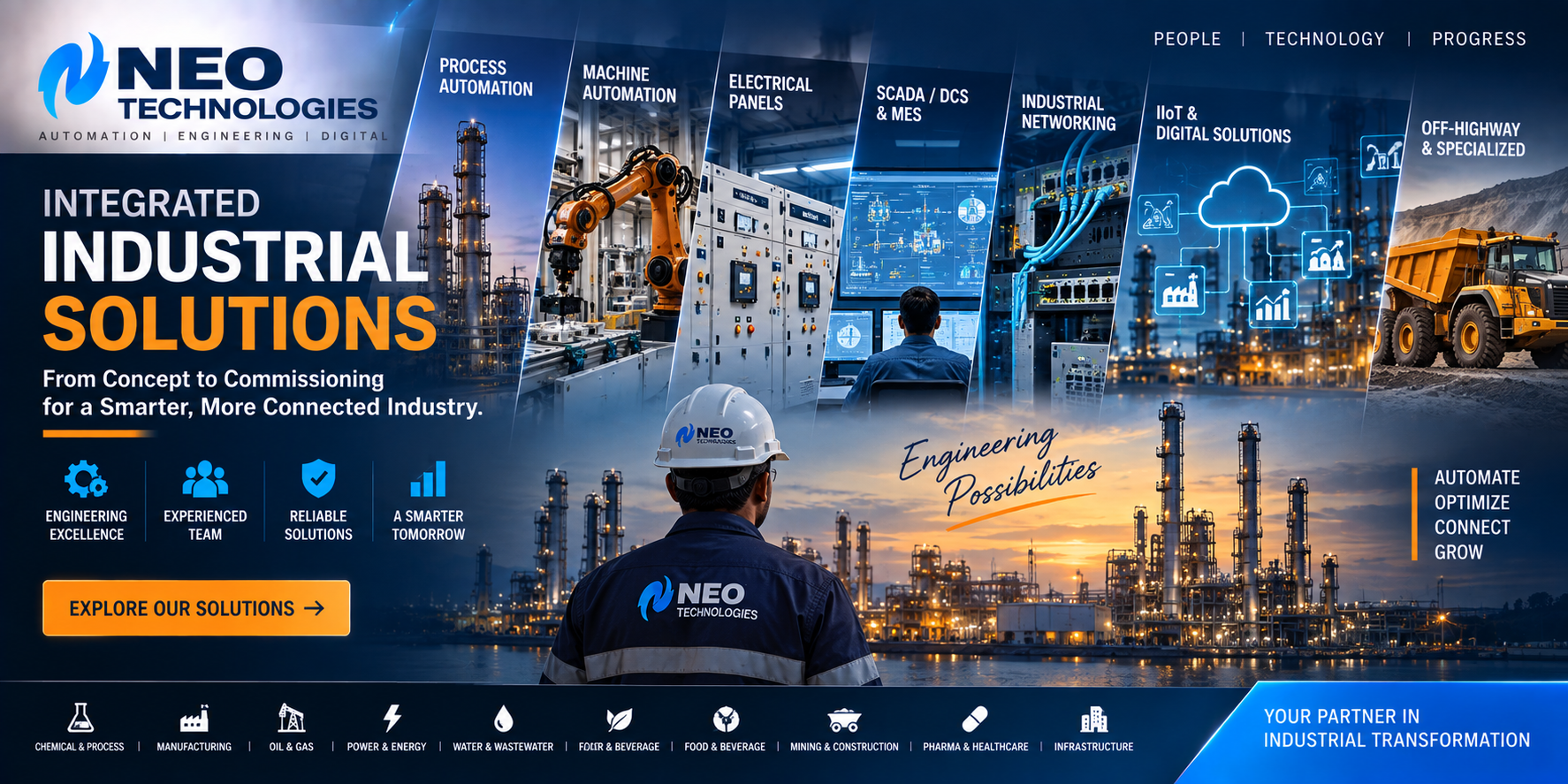
Modern industrial systems depend on electrical engineering, automation, communication and software working together as one coordinated architecture.
Neo Technologies brings these disciplines together across machines, production lines, process plants, electrical systems and connected industrial operations.
Our solution portfolio spans the field level through control, visualization, connectivity and operational information systems.
Sensors and electrical systems establish the physical foundation. Controllers automate machines and processes. Industrial networks connect assets. SCADA, MES and digital technologies transform operational data into useful production information.
Explore the major technology areas that make up Neo Technologies' industrial solutions portfolio.
Integrated control and monitoring solutions for continuous and batch industrial processes.
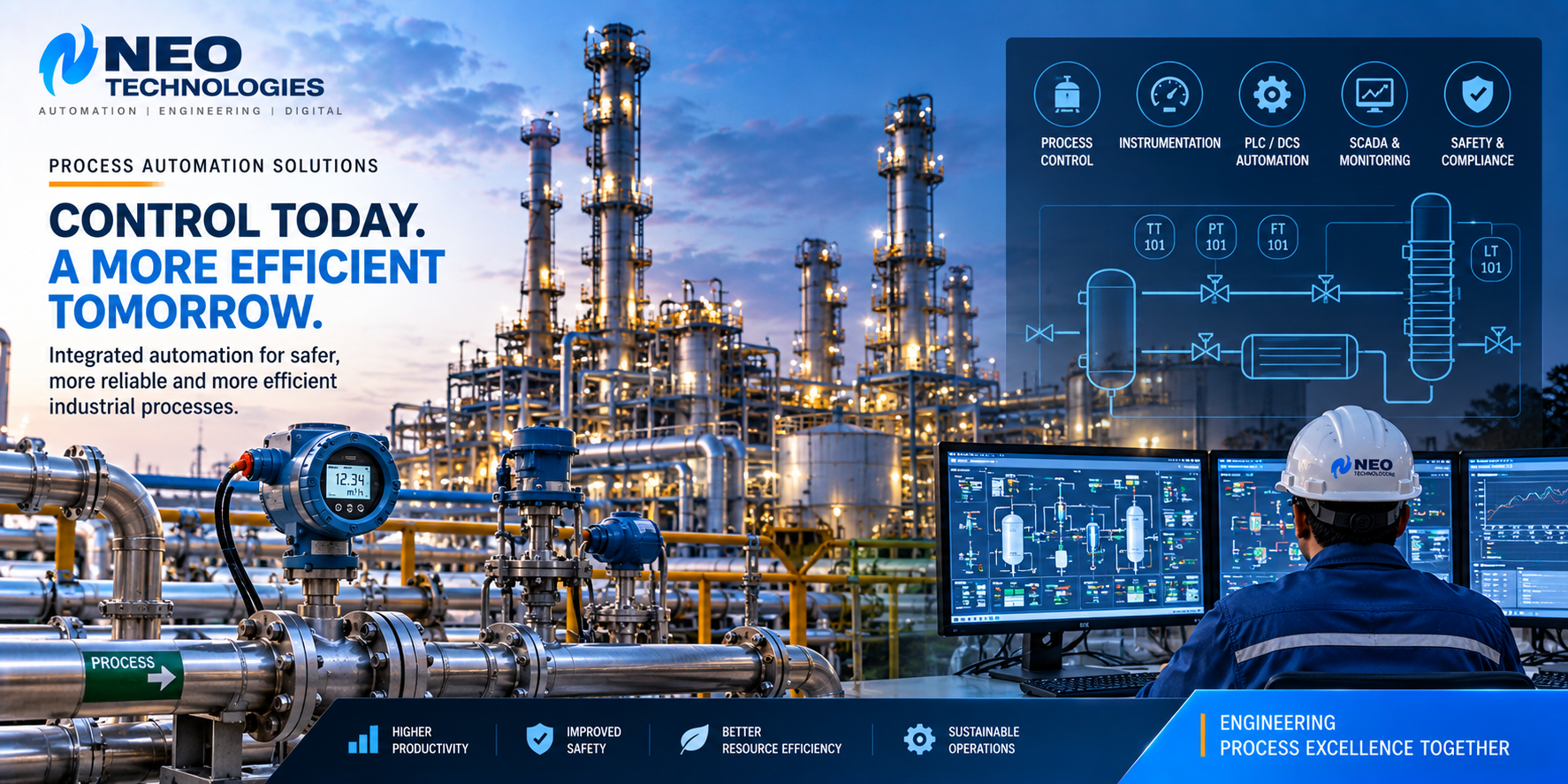
Process automation combines field instrumentation, control systems, supervisory monitoring and final control elements to manage industrial processes consistently and effectively.
Integrated machine-control platforms for OEMs, machine builders and automated production equipment.
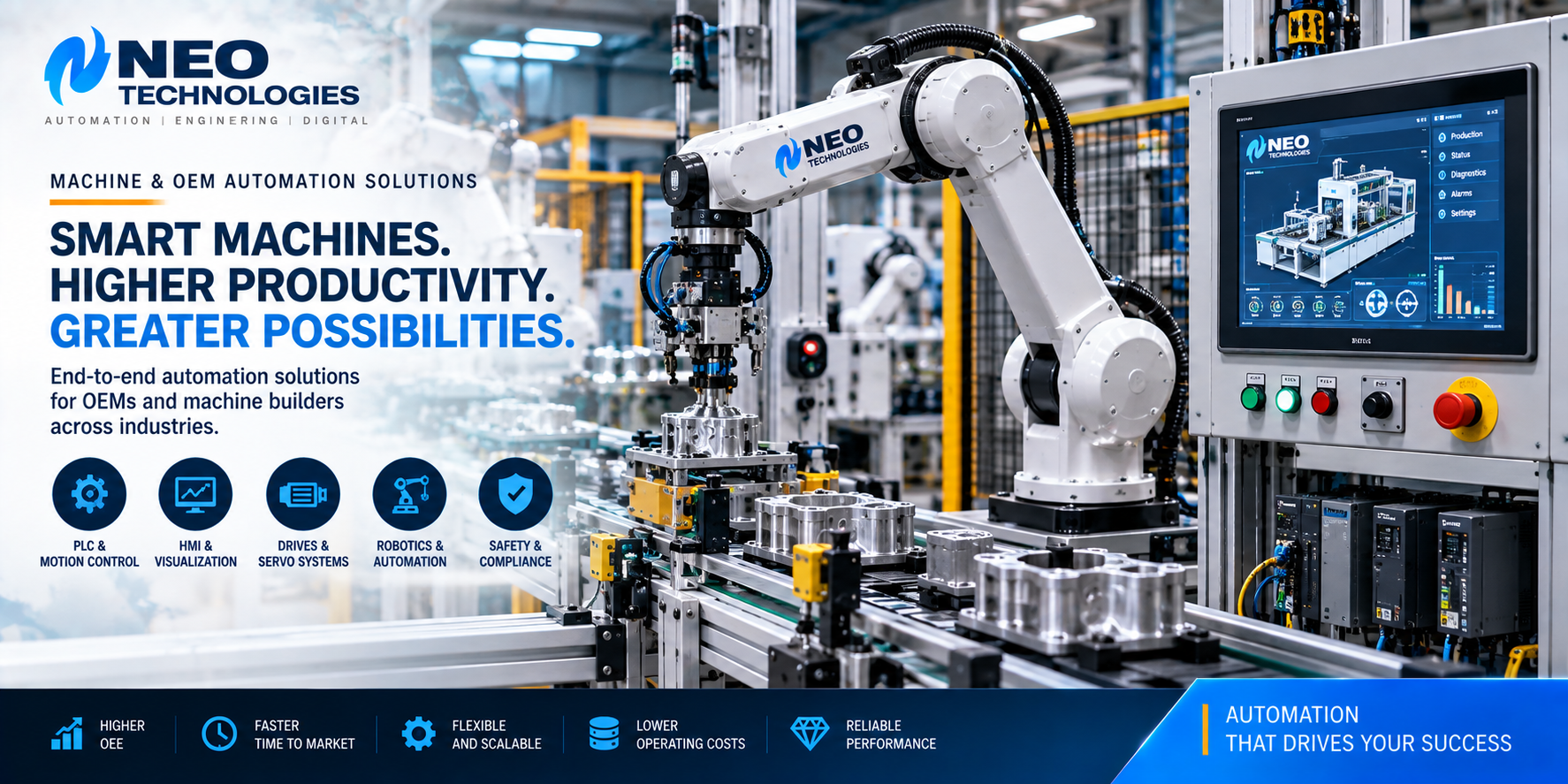
Machine automation brings PLC control, operator interfaces, drives, servo systems, sensors, robotics and safety functions into a coordinated machine architecture.
Electrical power distribution, protection and control engineering for industrial applications.
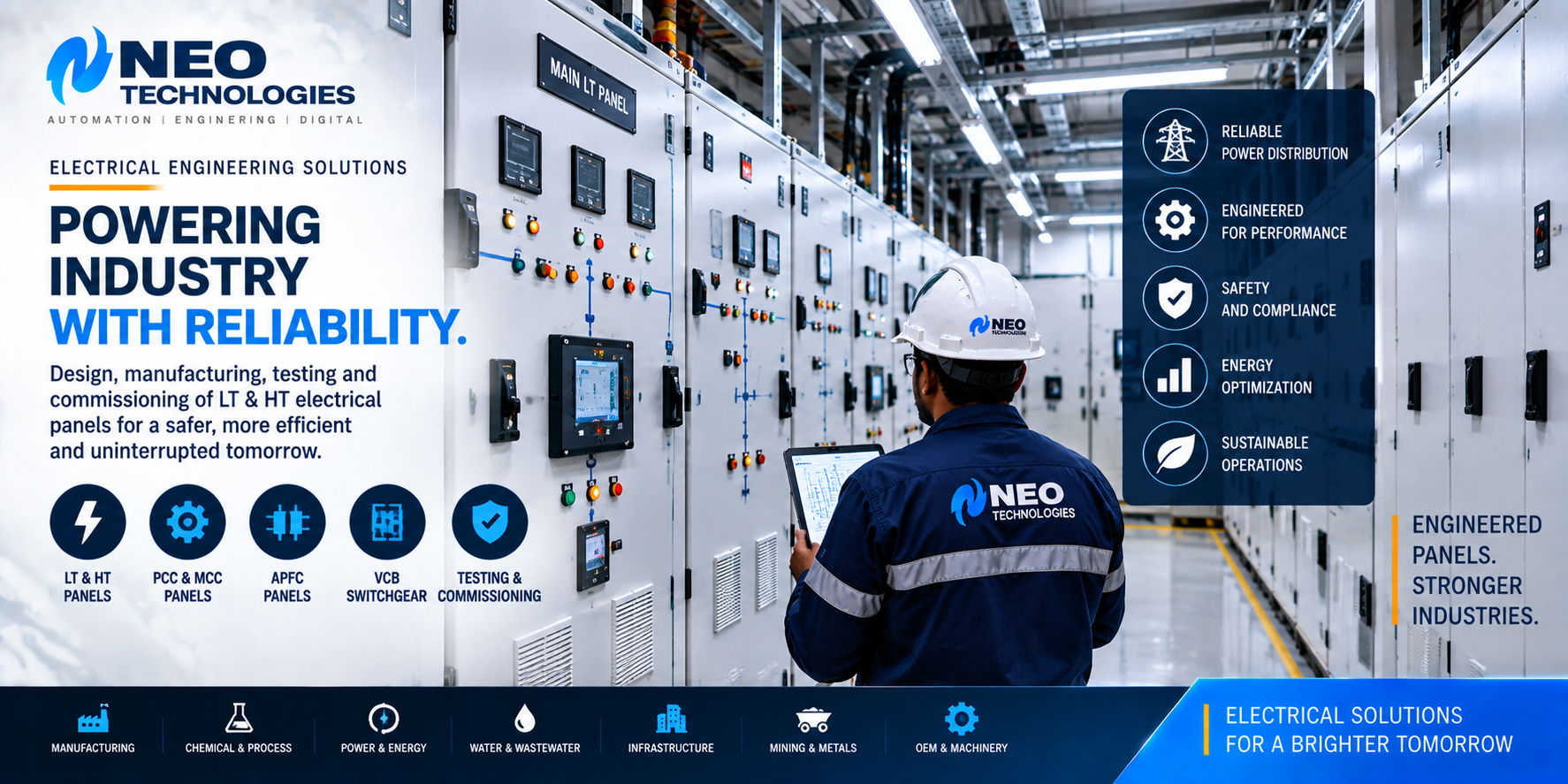
Electrical engineering connects incoming power with industrial loads through coordinated distribution, switching, protection, motor control and power-management systems.
Connect field devices, controllers, networks, supervisory systems and production information into one coordinated architecture.
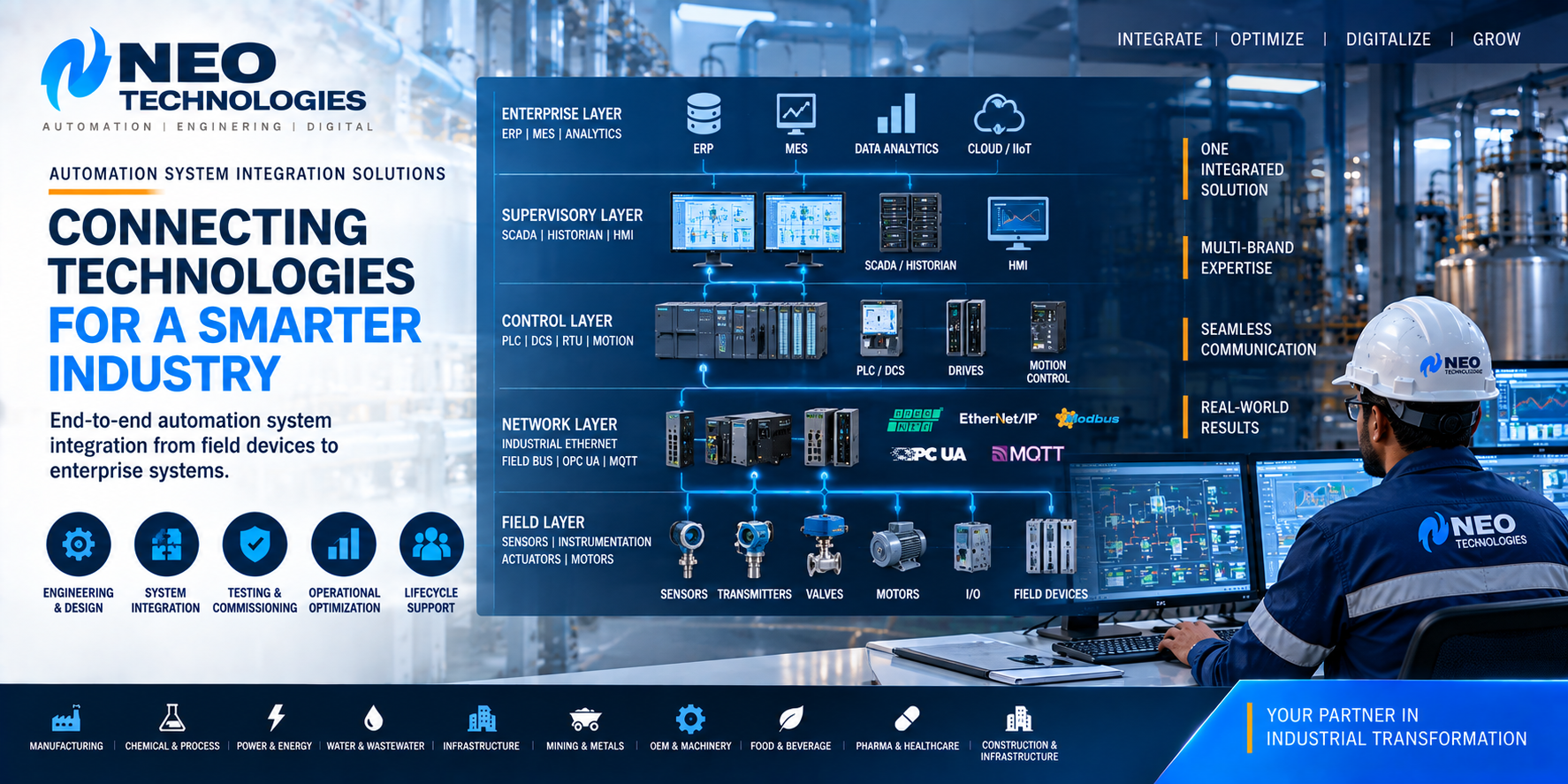
System integration focuses on the interfaces between field instrumentation, controllers, drives, networks, visualization and higher-level operational systems.
Connect machines, process information and production systems through industrial data and digital technologies.
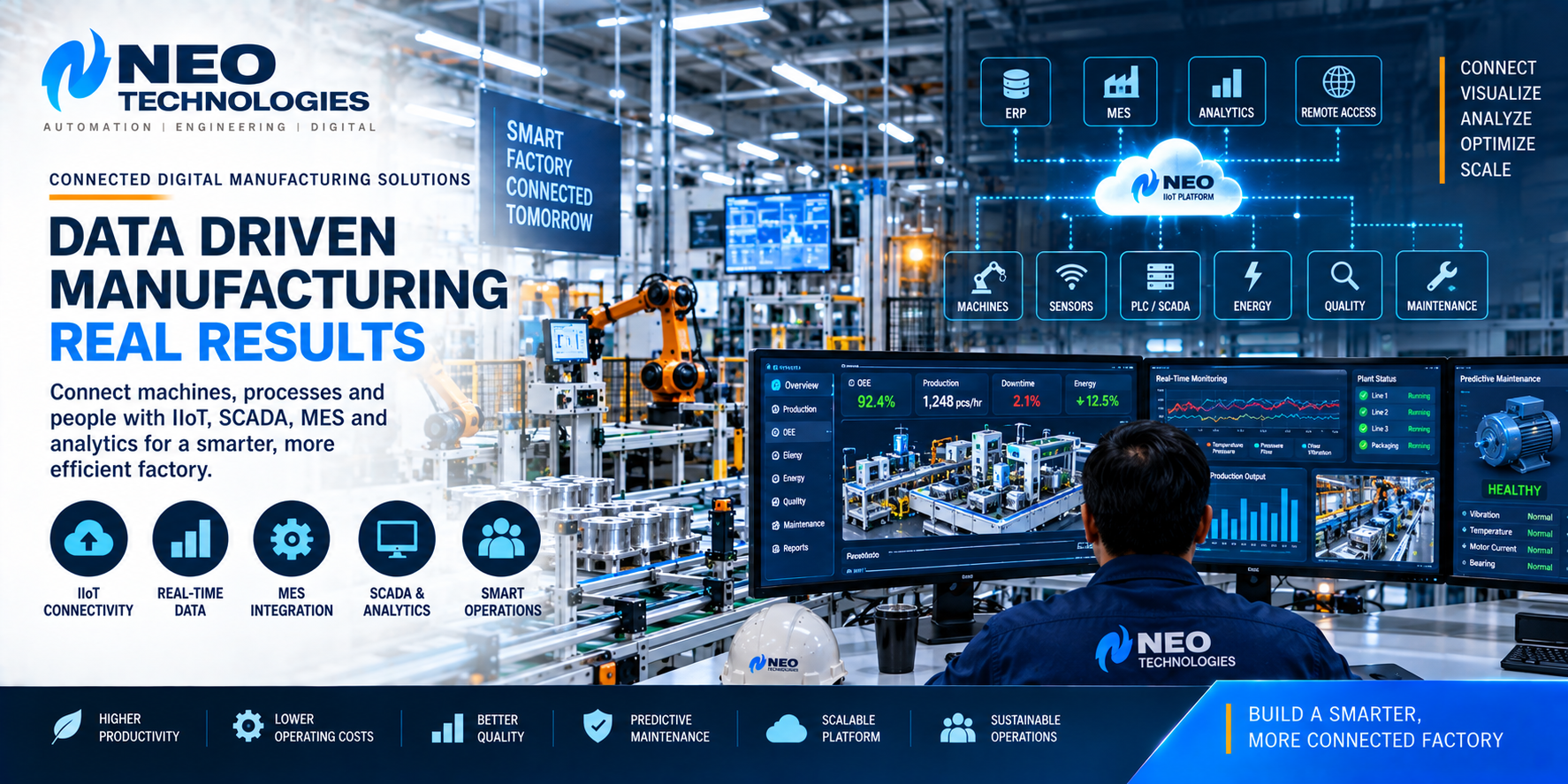
Digital manufacturing connects operational assets with visualization, production-management and information systems to create a more connected manufacturing environment.
Control, communication, electro-hydraulic and telematics solutions for specialized mobile machinery.
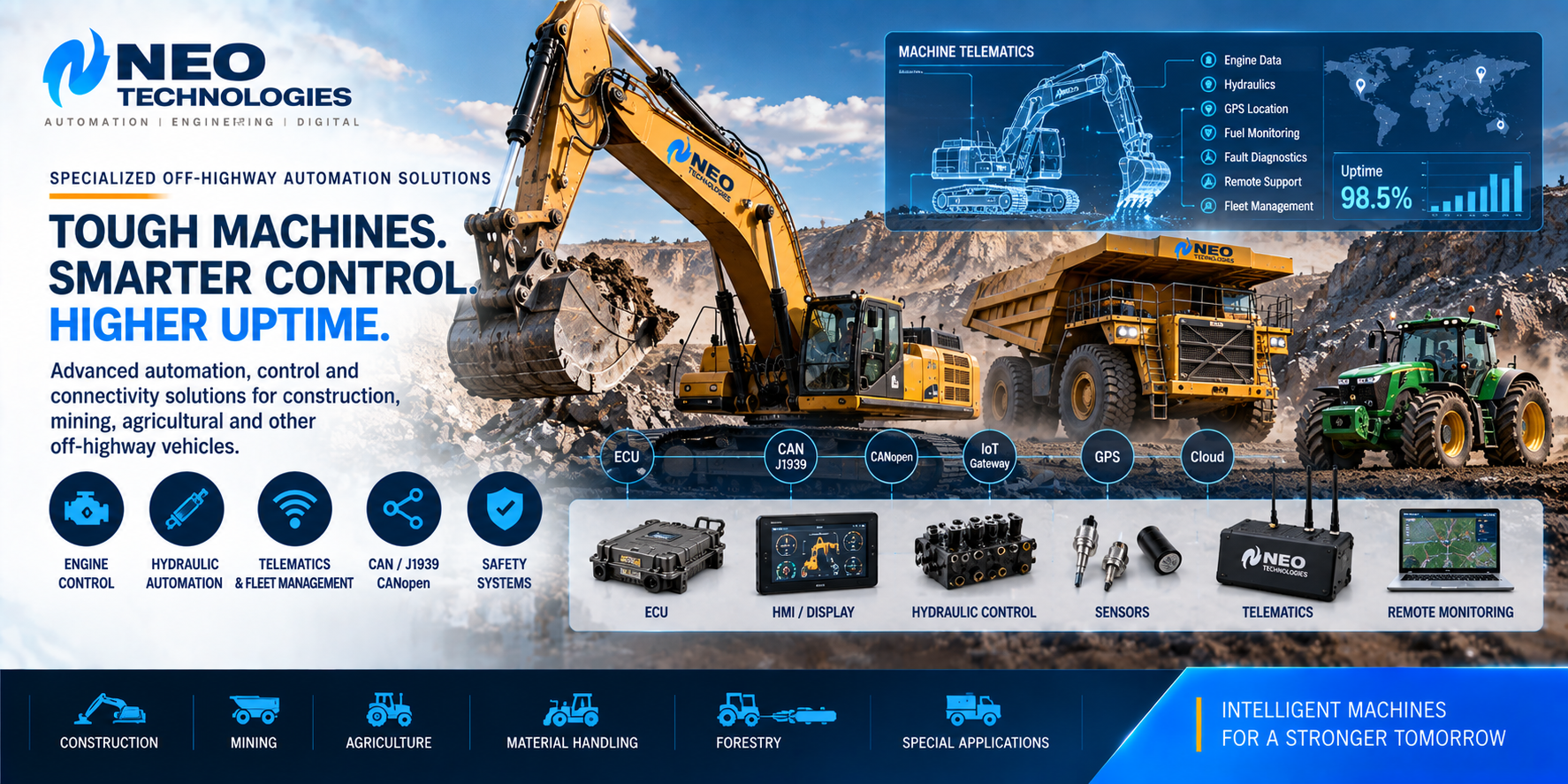
Off-highway automation brings electronic controllers, vehicle networks, operator interfaces, sensors and electro-hydraulic control together for demanding mobile-machine applications.
The individual solution areas become more valuable when designed as layers of a connected industrial system.
Sensors, transmitters, valves, motors, actuators and electrical devices.
PLC, DCS, drives, motion systems and mobile controllers.
Industrial Ethernet, fieldbus, CAN and communication gateways.
HMI, SCADA, historian and plant supervisory systems.
MES, IIoT, analytics and enterprise-system integration.
Communication infrastructure connecting PLCs, drives, machines, instrumentation and supervisory systems.
Explore Networking →Plant visualization, process supervision, production information and manufacturing operations integration.
Explore Integration →Servo, motion-control and robotic technologies for automated handling, positioning and production.
Discuss Robotics →Application-specific solutions combining electrical, automation, networking and software technologies.
Discuss Your Requirement →Different industrial environments require different combinations of control, electrical, instrumentation, communication and digital technologies.
A structured engineering process helps connect project requirements with technology selection, implementation and commissioning.
Understand process, machine, electrical and operational requirements.
Define system layers, technologies and interfaces.
Develop electrical, control, network and software engineering.
Connect equipment, controllers, networks and software systems.
Verify functionality, interfaces and system behaviour.
Deploy, validate and hand over the operational system.
Industrial projects frequently cross the boundaries between electrical engineering, automation, communication and software. Our approach focuses on how those systems work together.
Start with the process, machine and operational requirement before selecting the technology.
Bring electrical, controls, communication and industrial software into a coordinated architecture.
Design around actual machines, production systems and process operating environments.
Create a technology pathway from field devices and controls to operational information.
Tell us about your machine, process, electrical system or industrial digital requirement. Neo Technologies can help define the control, electrical, communication and integration architecture required for the application.
Discuss Your Project About Neo TechnologiesSolution areas include process automation, machine and OEM automation, automation system integration, SCADA and DCS integration, MES connectivity, industrial networking, electrical panel engineering, IIoT and specialized off-highway automation.
Automation system integration connects field instrumentation, controllers, drives, HMIs, SCADA systems, industrial networks and related operational technologies into a coordinated system.
Process automation typically manages continuous or batch industrial processes, while machine automation focuses on the coordinated operation of individual machines and production equipment.
Yes. Electrical and control panels can integrate PLCs, HMIs, drives, protection devices, meters and communication interfaces as part of a broader industrial automation architecture.
Depending on installed equipment and available interfaces, technologies such as industrial gateways, OPC UA, MQTT, SCADA, historians and IIoT platforms can provide connectivity between operational assets and higher-level systems.
Customized projects can combine electrical, automation, control, communication and industrial software technologies according to the requirements of the machine, process or production system.